How to Stop Porch Pirates: What Works, What Doesn't, and Why
To stop porch pirates, shrink the window a package sits unattended: route deliveries to lockers or pickup points, use delivery instructions to hide boxes from the street, require signatures on high-value orders, and retrieve fast. In a 2025 SafeWise survey of 7,500 US adults, 31% had a package stolen in the past year — median value $143.
The honest framing: porch piracy is a crime of exposure time. A box on an open porch is value sitting unattended in public view, sometimes for hours. Every tactic that works shrinks that window or moves the box out of it. Every tactic that fails leaves the window open and merely records what happens inside it.
What this looks like on a real property
Voice first. Then the light. Then the siren.
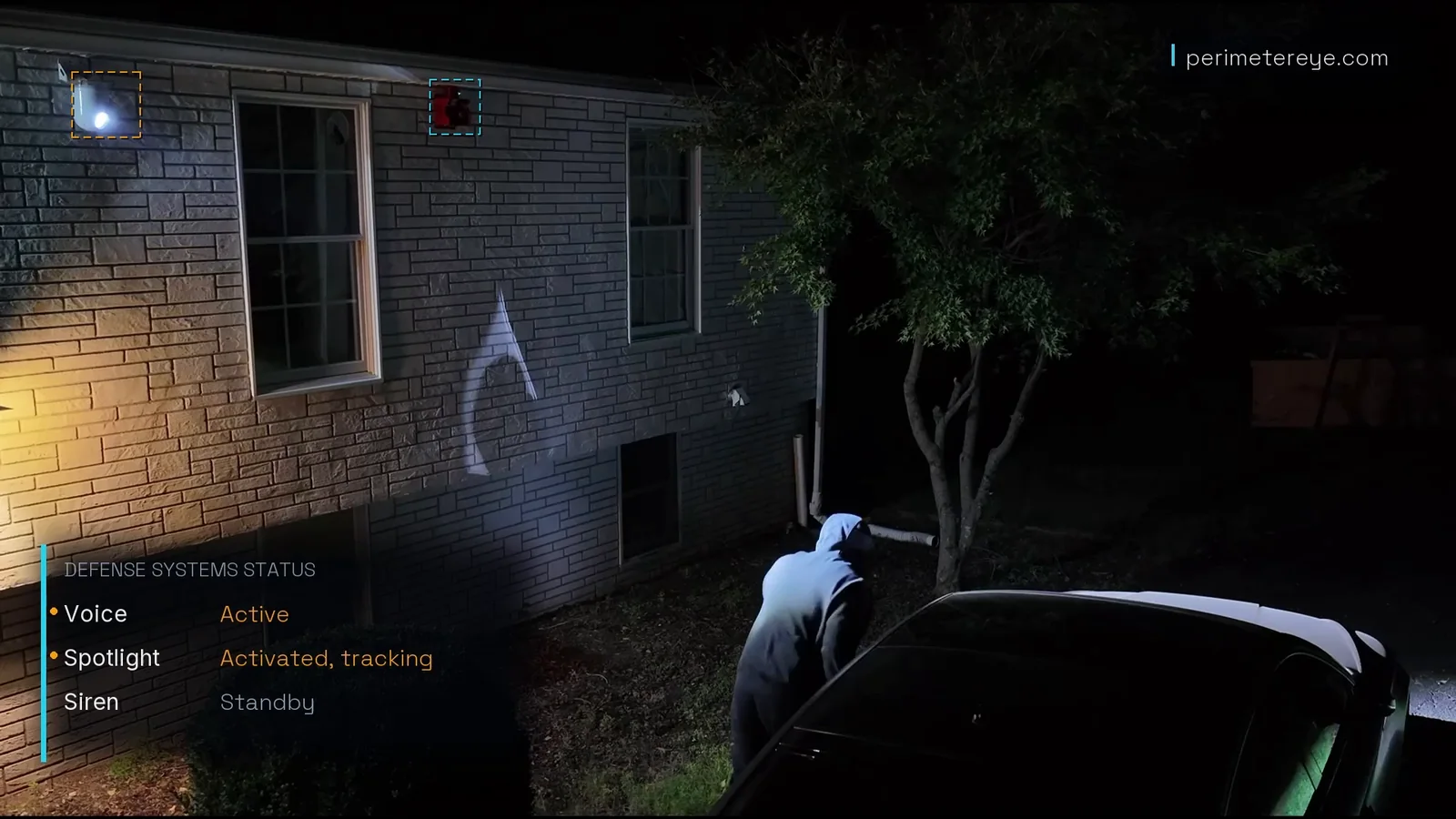
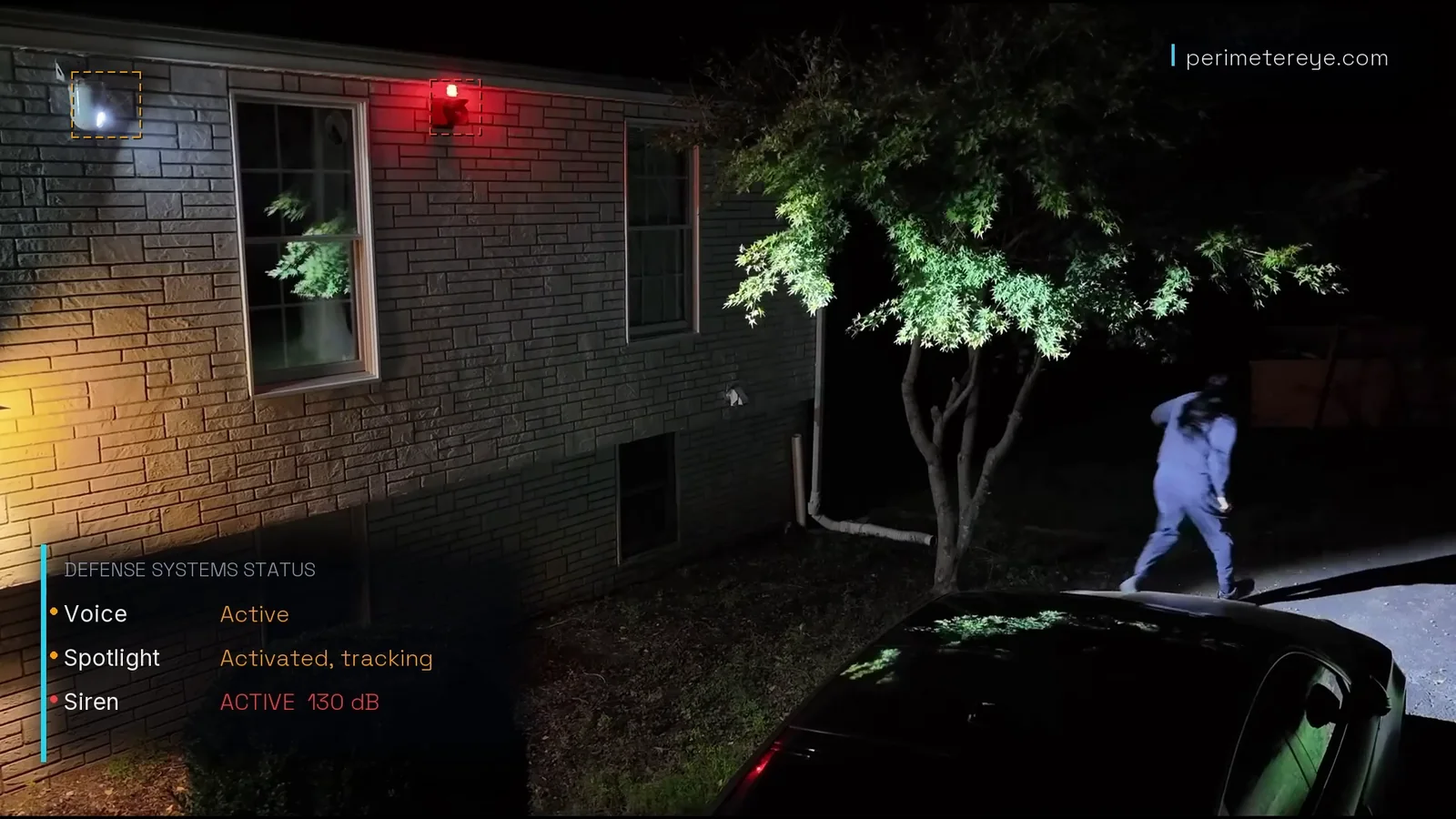
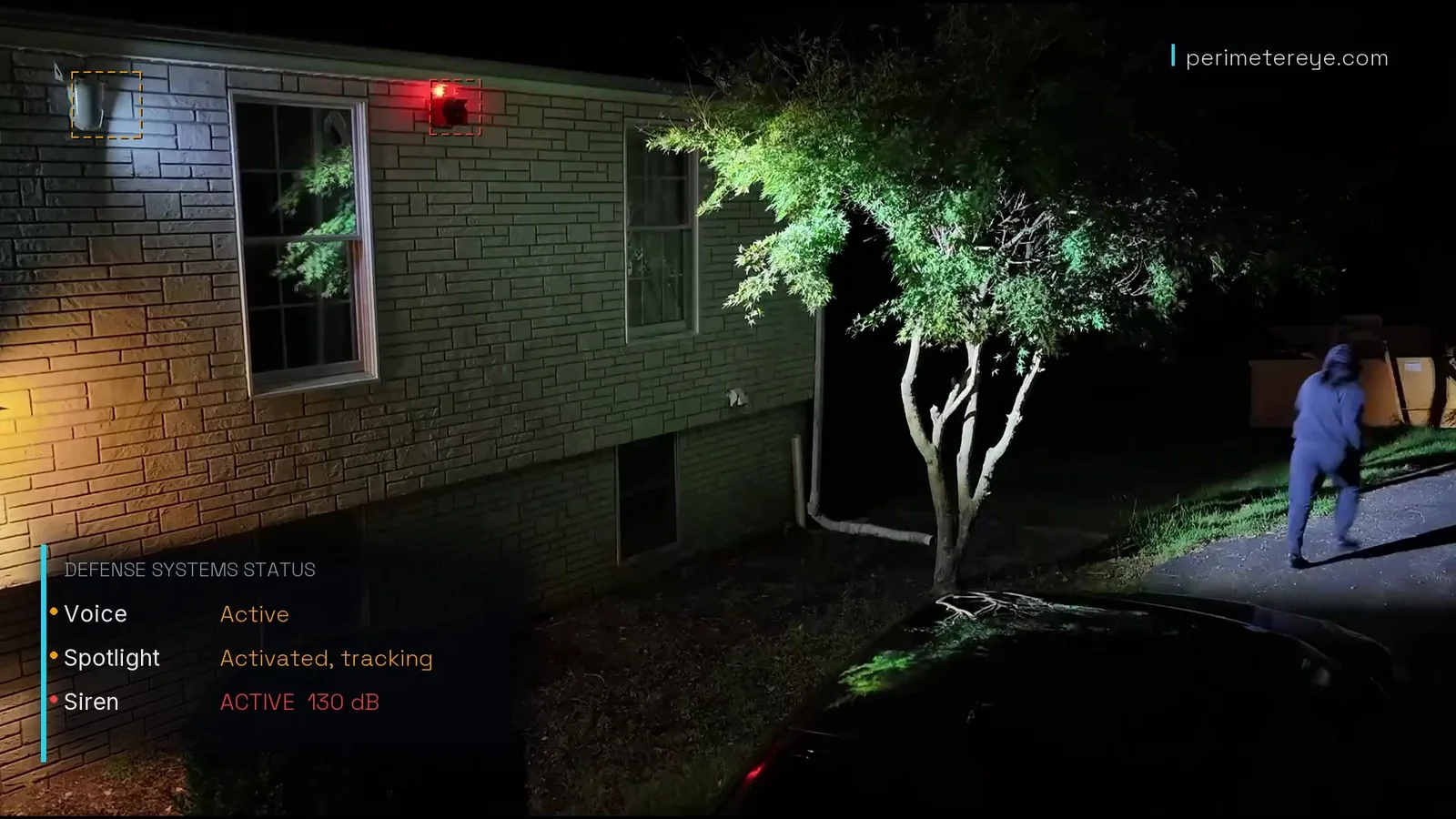
Stills from the demonstration with the system’s status on screen. Each part of the response switches on as the person keeps going, automatically.
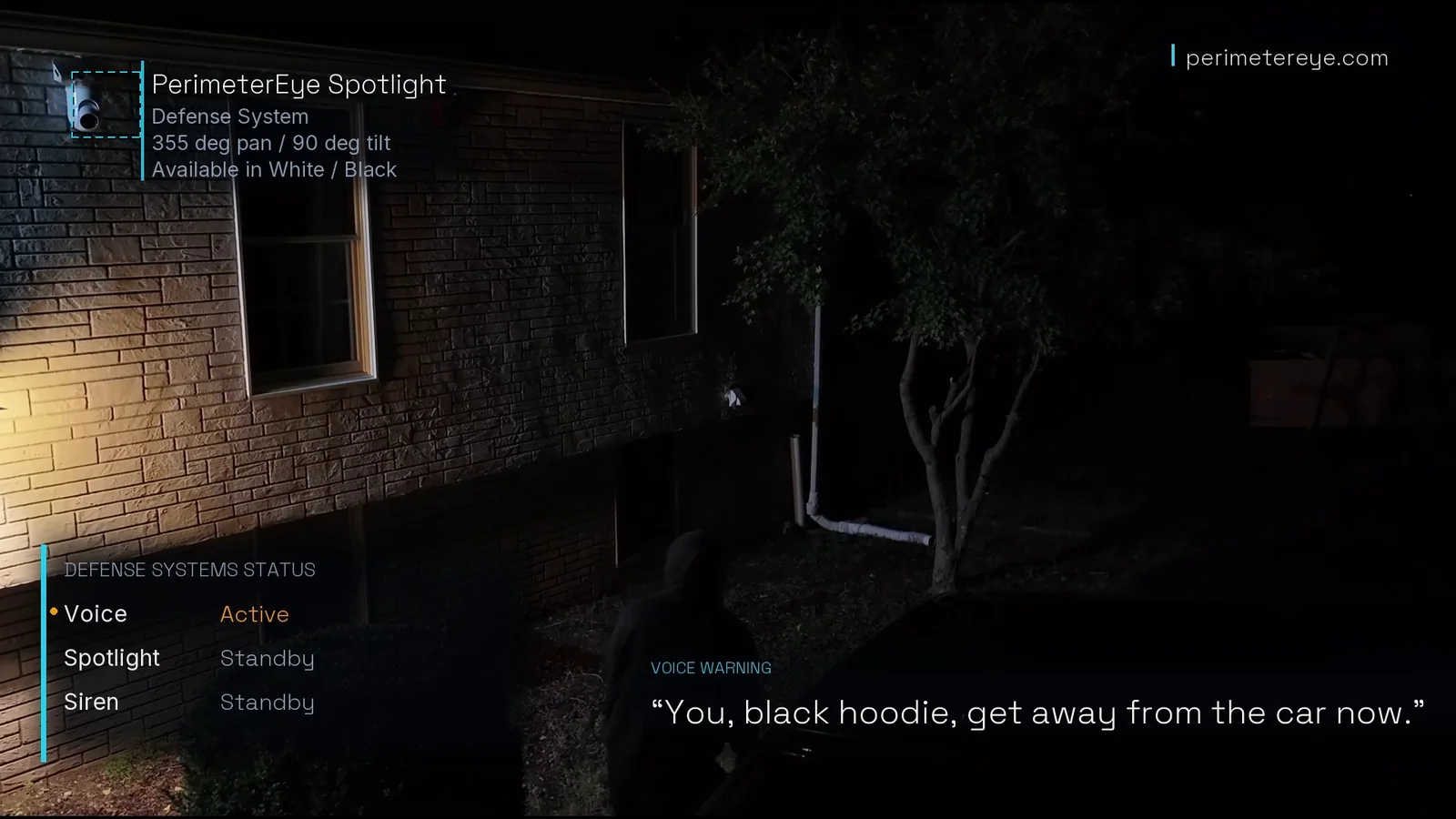
1 of 4 · VoiceView full size
A warning with their description
The first response is spoken, and it is about them: “You, black hoodie, get away from the car now.” The searchlight and siren are on standby.
2 of 4 · SearchlightView full size
Then the light finds them
The person stays at the car, so the searchlight activates and tracks. They are lit up where they stand.
3 of 4 · SirenView full size
Then the 130 dB siren
The siren joins the voice and the light, and the person runs from the car.
4 of 4 · FollowedView full size
Followed as they go
The beam stays on them as they run past the tree, with every part of the response still active.
Filmed on a real property. The attempt was staged for filming; the system’s response was automatic, with no operator.
How big the problem really is
The best recent consumer data comes from SafeWise's 2025 package theft report, a survey of 7,500 US adults: 31% said they had a package stolen in the previous twelve months, with a median value of $143. Survey numbers move with methodology, so treat the figure as directional — but every serious attempt at measurement lands on the same shape: extremely common, modest value per incident.
On the federal side, the strongest source is the USPS Office of Inspector General's May 2025 whitepaper on package theft (RISC-WP-25-002). It exists partly because no national crime statistic isolates porch piracy — stolen packages get folded into general larceny. The picture that emerges: high-volume, low-value-per-theft, and rarely prosecuted.
Why porches are so easy
The theft takes seconds, requires no tools, and looks ambiguous from across the street — people carry boxes off porches legitimately all day long. Some thieves simply follow delivery trucks, letting the courier mark fresh targets for them. And nothing about a porch reacts: the box sits there, the thief walks up, the box leaves.
The resale path is just as frictionless. Online marketplaces absorb sealed goods with few questions. Low risk, modest reward, repeated at scale — that is the whole business model, and it explains why the crime persists despite millions of cameras pointed directly at it.
Tactics that shrink the window
Every legitimate tactic attacks exposure time. Use several at once, and match the tactic to the value of what's coming.
The theme across all of them: none is a silver bullet, and most fail at the same point — the moment a courier, running late, leaves the box in plain view anyway.
- Pickup points and lockers (carrier lockers, retailer lockers, ship-to-store): the box never sits exposed. Limits: size restrictions and an extra trip.
- Delivery to your workplace, where allowed. Limit: not every employer allows it.
- Delivery instructions that hide the box from the street — a specific spot, not a vague request. Limit: driver compliance varies by route and day.
- Signature required on high-value orders. Limits: sometimes a fee, and a missed delivery becomes your errand.
- Timing: schedule deliveries for days someone is home, or arrange same-day retrieval by a neighbor.
- Holds: pause mail and packages entirely when you travel.
Lockboxes and porch lockers — worth it, with limits
A porch lockbox bolted to the structure genuinely works — when it gets used. The weak link is compliance: the courier has to see it, understand it, and bother. A label on the box plus matching delivery instructions in every retailer profile raises the usage rate substantially. Nothing gets it to 100%, and a rushed driver may still leave the parcel sitting on top of the very box meant to protect it.
In-garage delivery programs solve the exposure problem by trading it for an access-permission one — a courier opening your garage is a trade some households accept and others won't. And oversized parcels defeat every box ever made, which is why lockboxes pair naturally with pickup points for big items.
The camera irony
Notice what supplies the internet's bottomless feed of porch-pirate videos: doorbell cameras. The footage exists precisely because the camera doesn't interrupt the theft. It observes it, in excellent detail, and notifies you afterward — or while you're in a meeting, watching a live view of your package leaving. The thief is on and off the porch before any human can respond.
This isn't a knock on doorbell cameras; they are competent at what they're built for, and clips do occasionally help police tie a serial offender to a route. But a hooded figure grabbing a box in seconds is rarely identified, and thieves have learned the camera's real limit: it watches. Recording is not reacting, and the porch-pirate video genre is the proof.
When the property keeps watching after the courier leaves
This is where a property-defense system differs in kind rather than degree. PerimeterEye treats a delivery as an event with a second act. Delivery guidance speaks drop-off directions to the driver at the door — where to place the box so it's out of street view — and the AI writes a plain-language record of the drop, so you know a package is down and where it went.
Then it watches the package. If someone approaches it later who isn't the household — it knows the household, so your family and the regular mail carrier never trigger anything — the property responds in seconds: a live AI voice addresses that specific person out loud, describing them; after dark, a motorized searchlight locks on and follows them; and escalation runs up to a 130 dB siren with priority alerts and live video to your phone, where you can speak yourself. Package detection and delivery guidance work in every mode except Off and Quiet. No security system can guarantee prevention of every incident — but a porch that speaks to the person reaching for the box is no longer the easy version of this crime.
If a package was already stolen
Work the refund path first: report to the retailer and the carrier promptly — most major retailers replace a first stolen package — and keep the confirmation. For anything shipped through USPS, file with the Postal Service, and report theft to the USPS Office of Inspector General. File a police report on the non-emergency line with any footage; it rarely recovers your box, but it feeds the pattern data that catches repeat offenders. Check your credit card, too — many include purchase protection that covers theft shortly after delivery.
Then change one thing about your delivery setup. Your address just proved it works as a target, and porch pirates rerun routes that paid.
Common questions
Do porch pirates ever get caught?
Rarely, honestly. Most thefts take seconds, involve modest values, and produce footage too generic to identify anyone, and the crime is folded into general larceny statistics rather than tracked separately. Prosecutions do happen, usually for repeat offenders working one area — which is why reporting with footage still matters. But prevention beats prosecution by a wide margin.
Will the retailer or carrier refund a stolen package?
Usually, for a first incident: most major retailers refund or reship, and carriers run claims processes for insured shipments. It isn't a legal guarantee, policies vary, and repeat claims at one address draw scrutiny. Report quickly, keep the confirmation, and check whether your credit card includes purchase protection as a second backstop.
Do package lockboxes actually work?
Yes, when two things hold: the box is bolted down, and the courier actually uses it. Compliance is the weak link — a rushed driver may leave the parcel on top of the lockbox. Clear delivery instructions plus a label on the box improve the rate. Oversized parcels won't fit, so pair a lockbox with pickup points for big items.
Is stealing a package a felony?
It depends on where you live and what was taken. Stealing US Mail is a federal crime, and several states have passed laws making package theft from a residence a felony regardless of value. Elsewhere it's ordinary larceny, graded by dollar amount. Either way, report it — charges tend to attach to patterns, not single boxes.
What delivery instructions actually help?
Give the driver a specific, easy spot that's invisible from the street: behind the pillar to the left of the door beats a vague request to hide the package. Easy matters — instructions that add time get skipped. Add a visual cue like a labeled bin, and put the same note in every retailer profile, not just one.
What it costs
See what a system costs for your property.
Essential system
As low as$146/mo*Essential covers a driveway and the approaches to the house. Larger properties usually suit Advanced or Estate; a specialist can size it with you before you order.
What’s included
- 5 ultra-HD 4K cameras
- 1 tracking spotlight
- 1 speaker/siren unit
- PerimeterEye Access intercom, included with every complete system
- 1 PerimeterEye control panel
- 1 PerimeterEye AI processor
*Essential system, $0 down: 36 monthly payments of $145.17 at 10% APR on the hardware price before sales tax, shown rounded up to the dollar. Affirm rates 0–36% APR; Klarna terms are shown at checkout. Subject to eligibility and lender approval; your rate, term and down payment may differ. US only; not available in all states. Software is billed separately: first 6 months included, then $99/month.
A porch that talks back
PerimeterEye guides the driver's drop-off, then watches the package after the truck pulls away — and addresses anyone who approaches it, out loud, in seconds, while you watch live and can speak yourself.