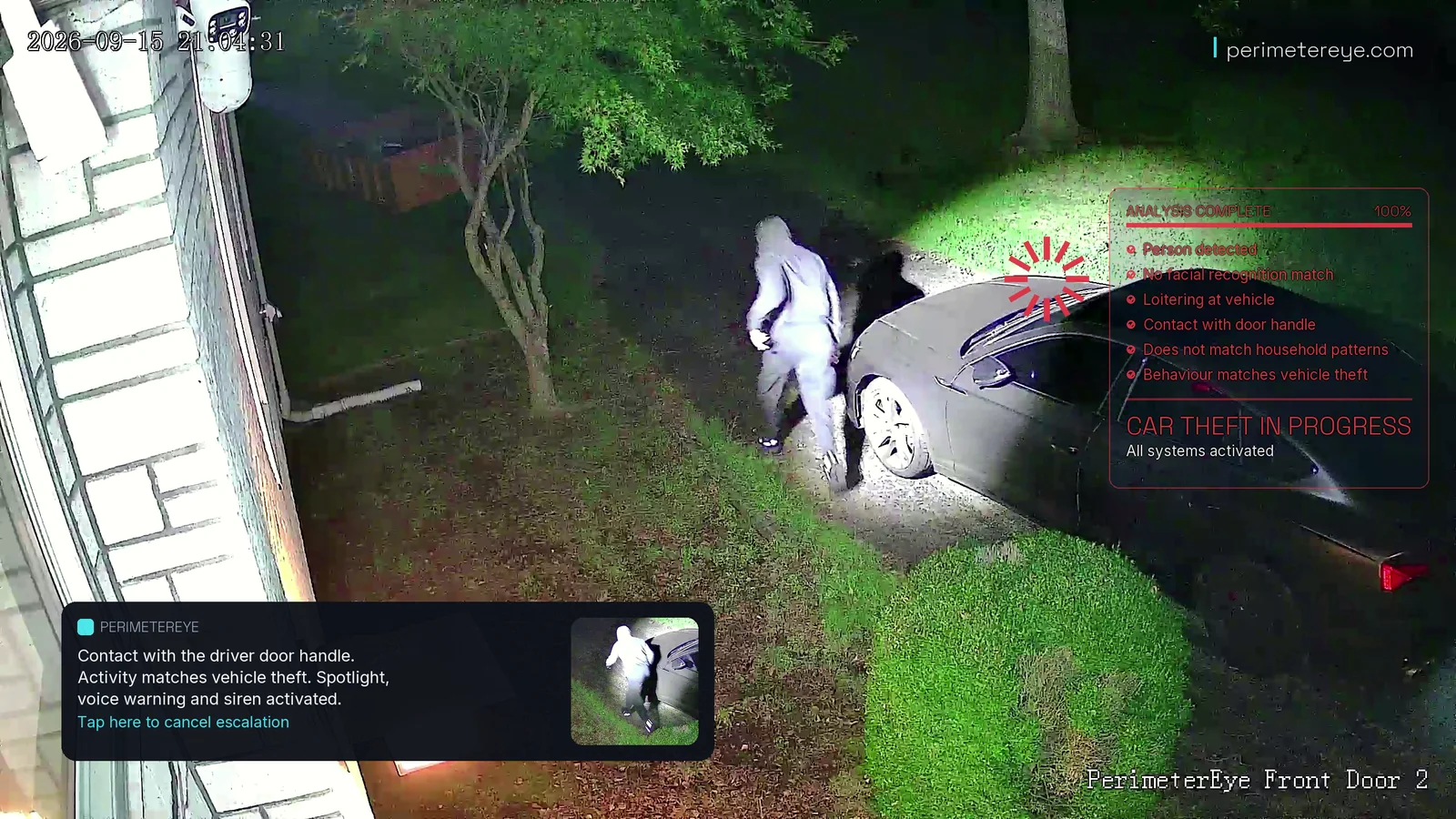
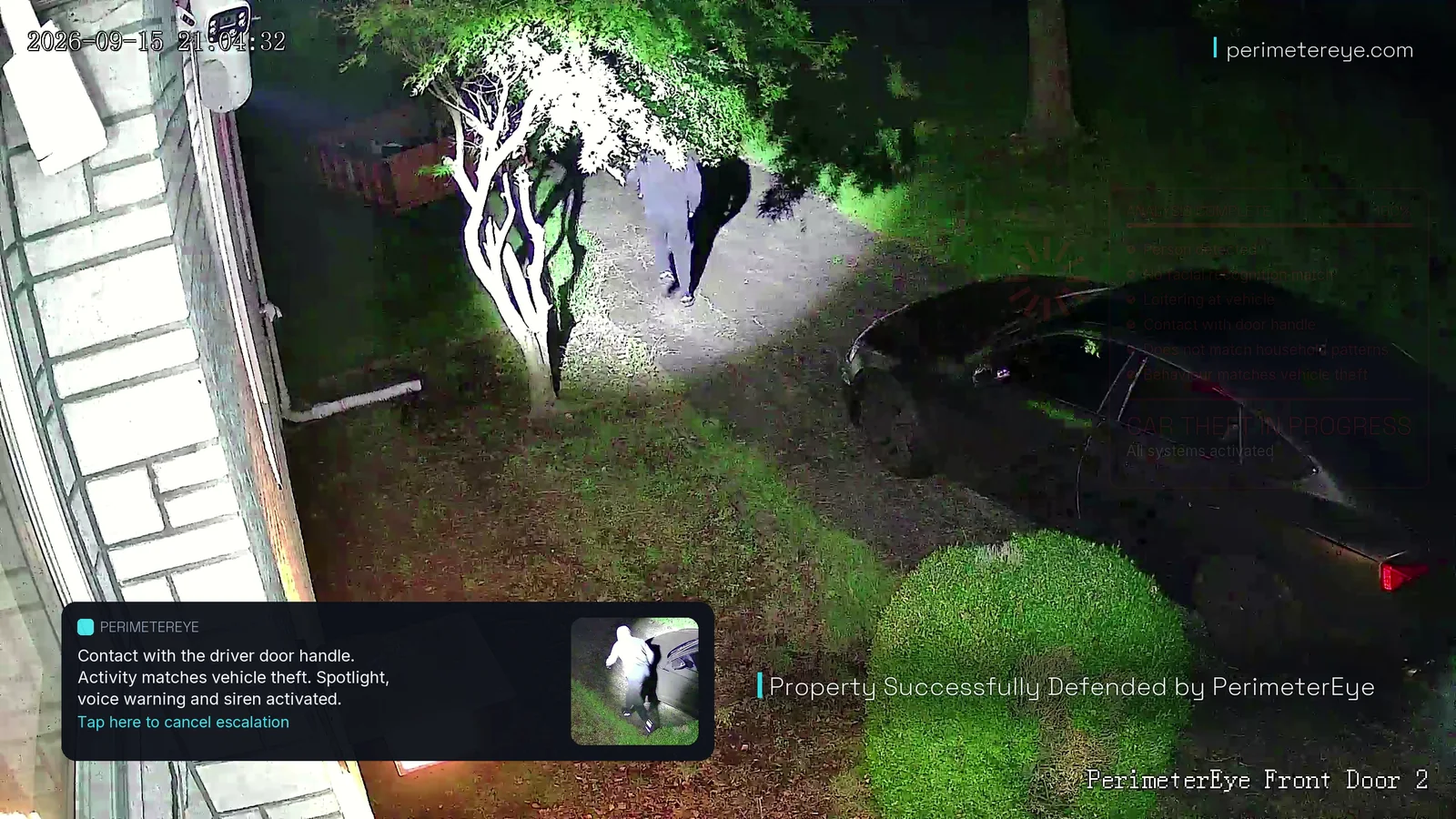
PerimeterEye vs Deep Sentinel: Guards in a Center vs Defense on the Ground
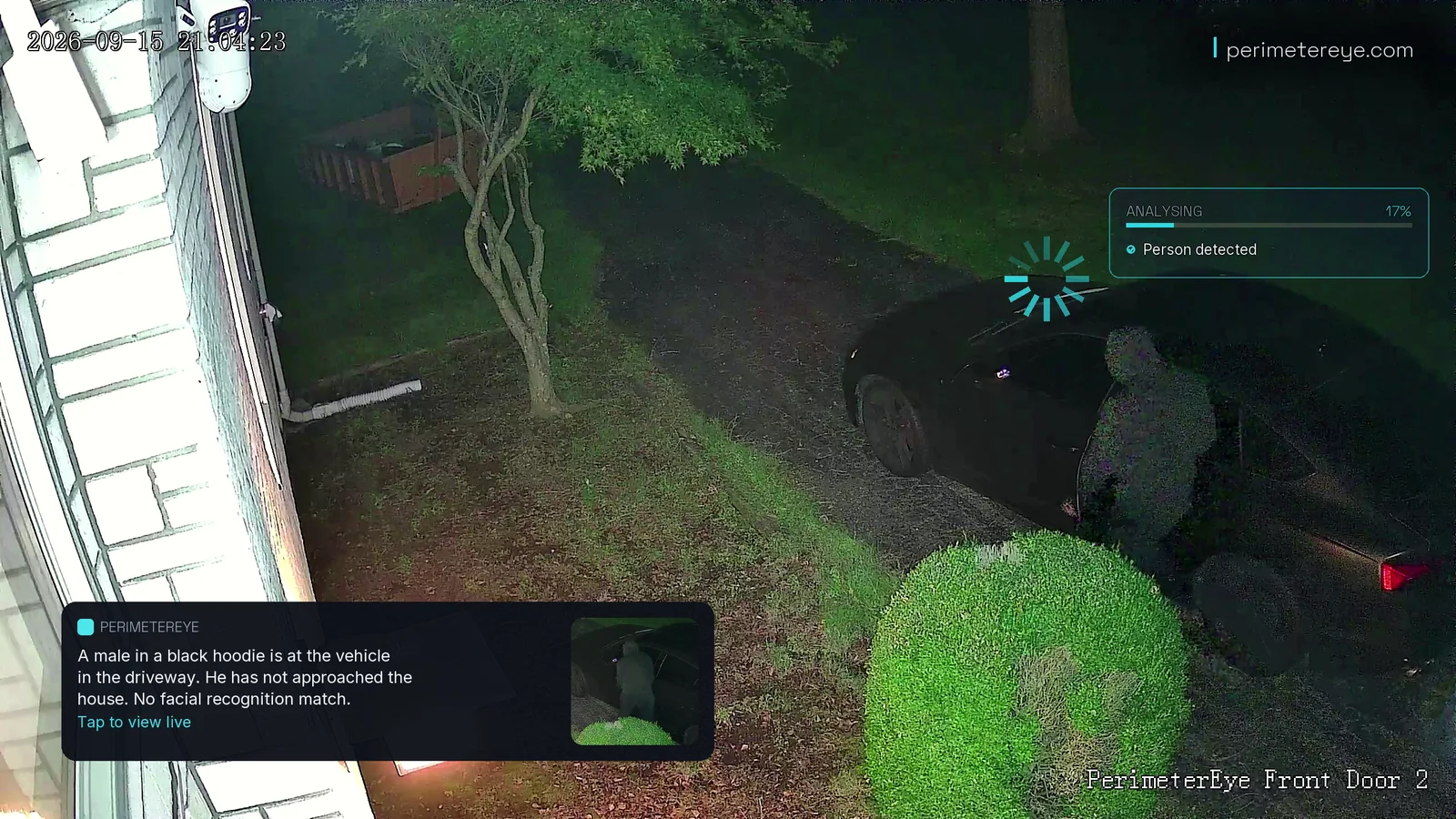
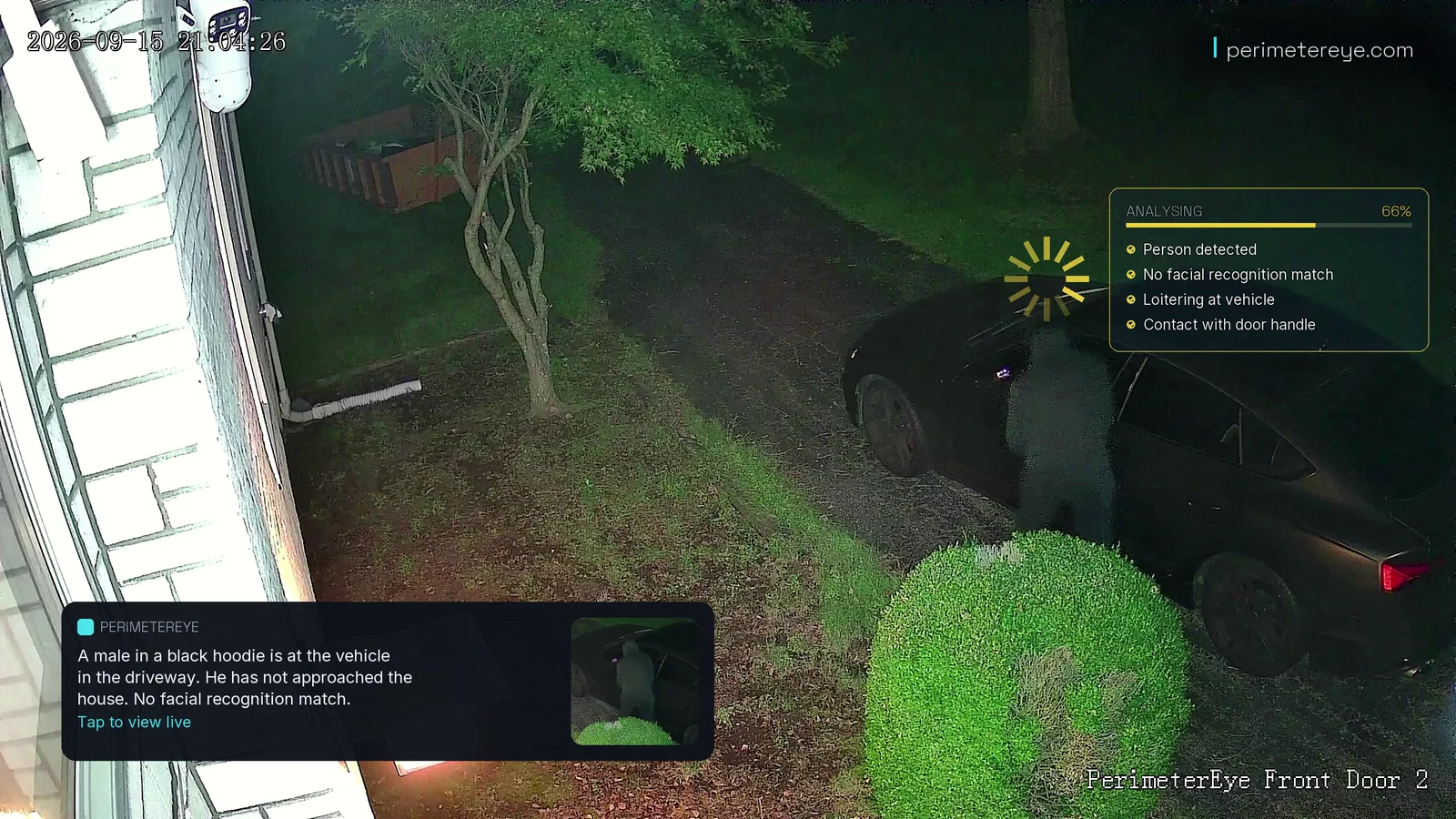
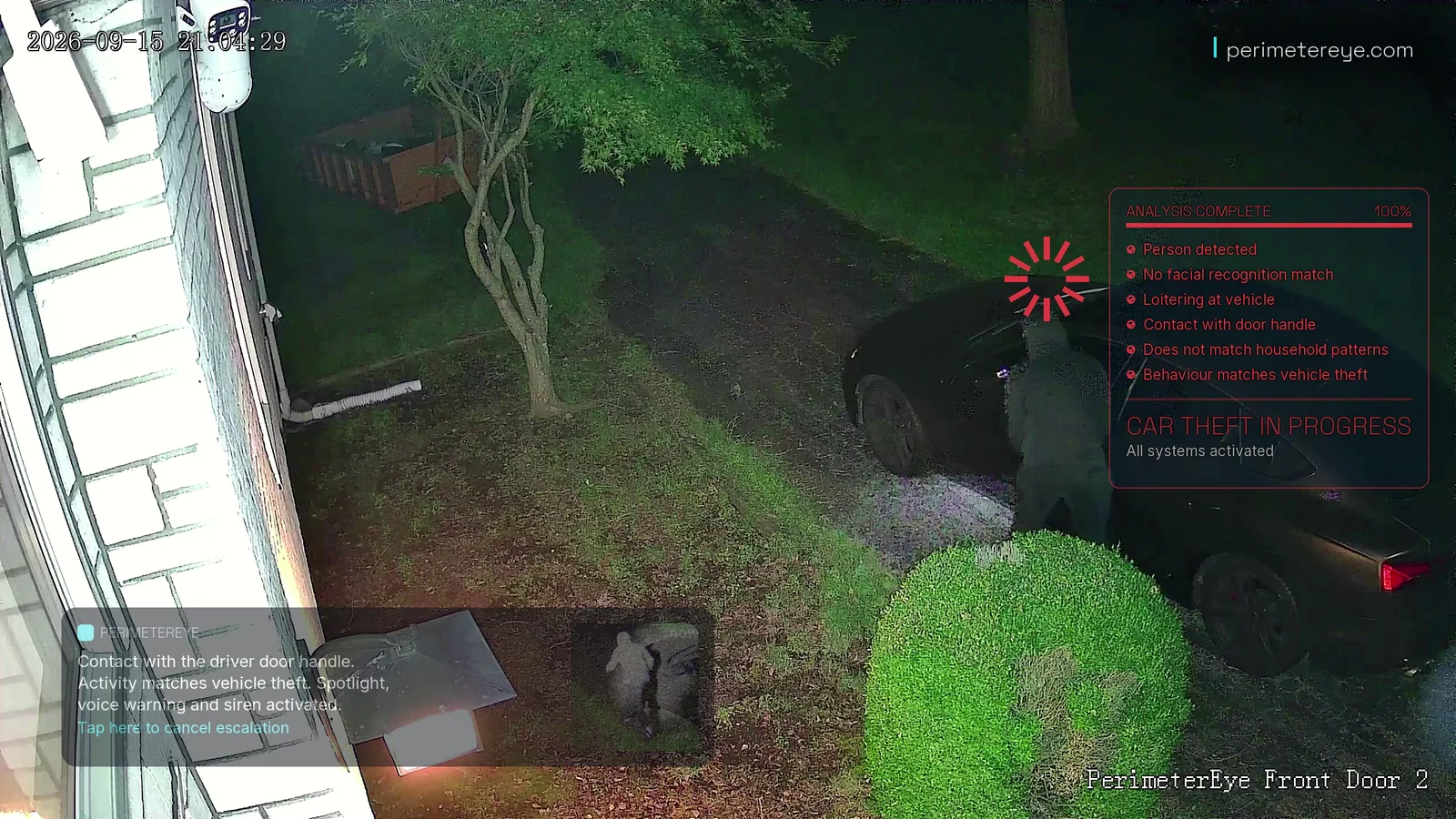
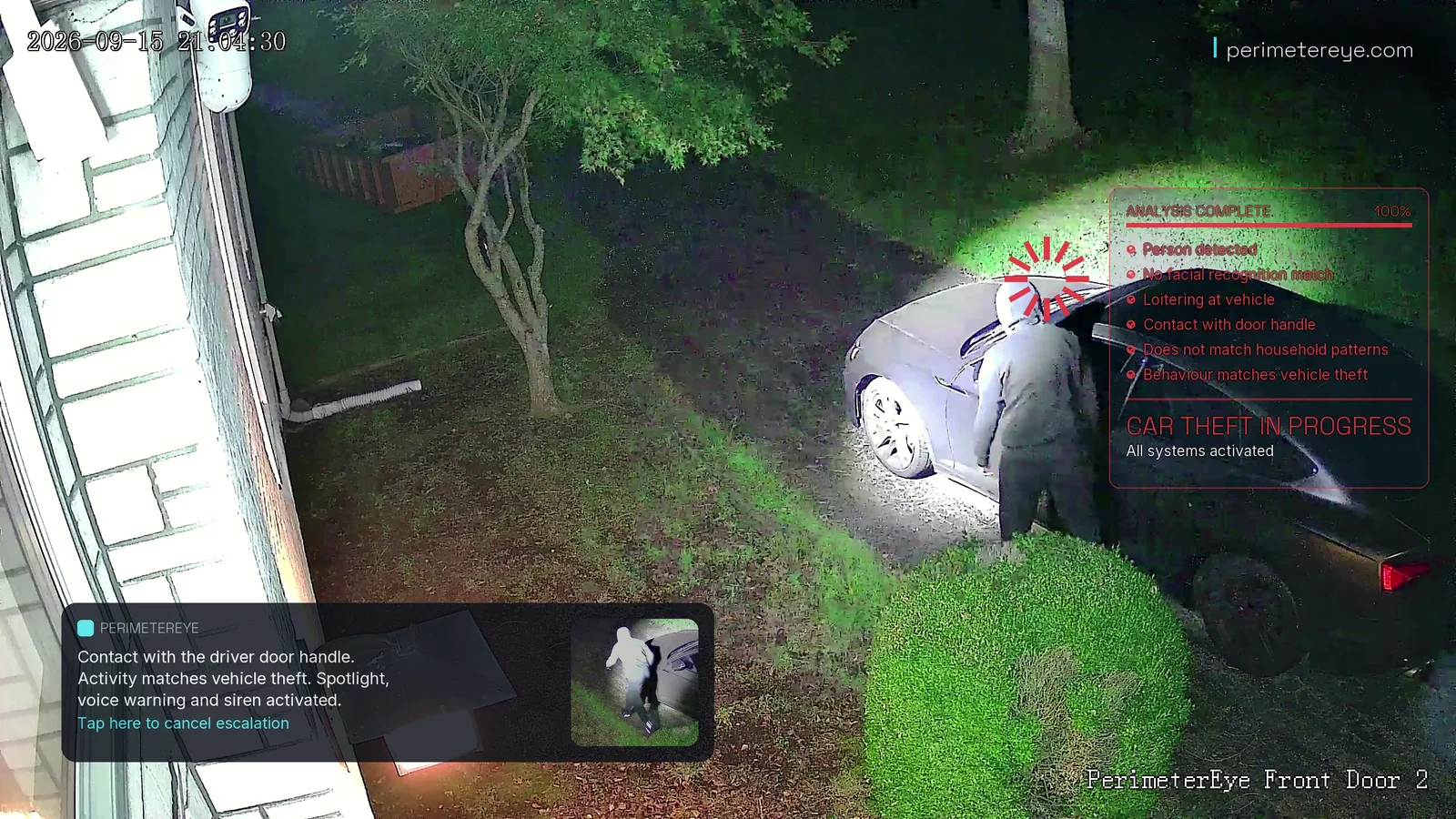
Deep Sentinel is the closest competitor to PerimeterEye in spirit: live human guards in a surveillance center watch your cameras and intervene by voice, from roughly $100 per month as of mid-2026. PerimeterEye removes the middleman. An Automatic Property Defense System on your own property verifies the threat, locks a tracking searchlight on, speaks to the specific person in frame, and escalates to a 130 dB siren — in seconds, with nobody watching your feeds.
Deep Sentinel hires humans to watch your cameras; PerimeterEye means nobody has to.
A guard can talk; a searchlight that locks on, a voice that names, and a 130 dB siren act.
Guard fees bill forever; PerimeterEye hardware is yours from day one, with $99 a month for the AI.
The Right Instinct, Moved Onto the Property
Deep Sentinel and PerimeterEye agree on the important thing: watching and notifying is not protection, and someone — or something — has to intervene while the event is happening. Deep Sentinel answers with people in a surveillance center. PerimeterEye answers with an Automatic Property Defense System living on the property itself: verification, a tracking searchlight, targeted live speech, and a siren, all in seconds.
The trade-offs are concrete. One model asks you to accept outside eyes on your home and open-ended monthly fees in exchange for human judgment on tap. The other gives you owned hardware, response measured in seconds, privacy by default, and you as the only human in the loop — with live video and manual control whenever you want them.
What every system includes
Credit Where It's Due: A Human Really Does Talk
Deep Sentinel deserves respect for the same insight PerimeterEye is built on: a notification is not a response. Their model puts live guards in a surveillance center who watch triggered camera events and intervene through the camera's speaker — a real voice, in real time, from roughly $100 per month as of mid-2026.
That genuinely works better than a silent clip, and Deep Sentinel proved a market for intervention exists. Where the two systems diverge is on four questions: who reacts, how fast, who sees your property, and what the response actually consists of.
Human Reaction Lag vs an AI That Lives On-Site
Any human-in-the-loop model carries structural physics. A guard covers many properties, not one. An event must trigger, travel to the center, land in front of an available person, be assessed, and then acted on. During surges — storms, holidays, a busy overnight — humans queue, and attention divides. None of that is a criticism of the guards; it is arithmetic.
PerimeterEye's intelligence runs on the Brain, a dedicated edge computer on your property, covering every camera simultaneously with no queue and no shift change. Verification, searchlight lock-on, and the first voice warning happen in seconds, every time, at 3 p.m. or 3 a.m. The AI also writes a full plain-language analysis of every event on every camera — not just the ones dramatic enough to escalate.
Who Is Watching Your Cameras?
With a guard service, the product is people watching your property. Employees of another company can observe your driveway, your yard, your family coming and going — that is the mechanism working as intended, and buyers should weigh it consciously.
With PerimeterEye, nobody watches your feeds. The system analyzes events on-site, acts on the property, and sends alerts and control directly to you. You watch live when you choose to, from the iOS app or the wall panel. PerimeterEye is not an alarm-monitoring service — alerts and control go directly to you. For many families, the difference between "guards watch my home" and "my home defends itself" is the whole decision.
A Voice Alone vs Light, Voice, and Siren Together
Deep Sentinel's intervention is a voice through a camera speaker. Useful — but it is one instrument, and it arrives from a device the intruder may not even be facing.
PerimeterEye plays a full ladder. A searchlight-class spotlight with 355 degrees of rotation locks onto the verified person and physically follows them — the police-helicopter effect — so the intruder knows the property has seen them specifically. Then a live AI voice describes them: "You, in the dark hoodie — you are not authorized to be on this property." If they persist, a 130 dB siren fires and a priority alert with live video reaches you.
The evidence favors the light in particular: a randomized experiment across 77 NYC public-housing developments (Chalfin et al., NBER Working Paper 25798, 2019) found added nighttime lighting cut outdoor index crimes at night by roughly 36%. A beam that finds and follows a person is that principle, concentrated on one target.
Fees Forever vs Hardware You Own
Guard monitoring is a service you rent indefinitely: from roughly $100 per month as of mid-2026, scaling with cameras and coverage, for as long as you want guards watching. Stop paying and the protection stops with it — the model owns the outcome, not you.
PerimeterEye is a purchase: $3,500, $4,725, or $6,850 depending on property size, each package including 4K cameras, tracking searchlights, siren, the video intercom with AI Doorman, the wall panel, and the Brain. You own all of it, with financing from roughly $139 per month and no contract. After activation, $99 per month covers the software and AI — the analysis, daily briefings, plain-language search, and the voice that does the talking.
When Deep Sentinel Fits
If you run a business and want human judgment outsourced — a storefront, a lot, a site where you want a person making the call and speaking with your authority — Deep Sentinel's model maps well. Some commercial owners specifically want to tell insurers and staff that trained guards watch the property overnight.
It can also suit owners who simply prefer a human in the chain, full stop, and accept the privacy trade and the recurring fees that come with one. For a home where you want response in seconds, no outside eyes on your family, and hardware you own — that is the property-defense category, and it is a different purchase.
Questions about perimetereye vs deep sentinel
Isn't a live human guard smarter than an AI?
Humans bring judgment, and Deep Sentinel's guards apply it well. But judgment arrives only when an available person sees the event. PerimeterEye analyzes every event on every camera in seconds, writes a plain-language account of each, and escalates instantly — and you remain the human in the loop, with live video, two-way talk, and manual control.
Does anyone at PerimeterEye watch my cameras?
No. Nobody watches your feeds — the system analyzes events on your own on-site Brain and acts on the property. PerimeterEye is not an alarm-monitoring service — alerts and control go directly to you. You choose when to watch live, from the iOS app or the wall panel, and the AI's written analysis covers everything you didn't watch.
How do the costs compare over the long run?
Deep Sentinel starts around $100 per month as of mid-2026 and bills for as long as guards watch — you never own the outcome. PerimeterEye is a one-time purchase from $3,500 with financing from roughly $139 per month, hardware you keep, and a $99 per month software and AI subscription after activation. No contract either way with PerimeterEye.
Is a voice warning really enough to run an intruder off?
Voice alone is one lever; PerimeterEye pulls three — a searchlight that locks on and follows, a targeted live voice, then a 130 dB siren — while alerting you with live video. Evidence says lighting matters: a 2019 NBER randomized experiment found added nighttime lighting cut outdoor night crime roughly 36%. Still, no security system can guarantee prevention of every incident.
What happens to each model when the internet goes down?
A remote guard center can only act on video that reaches it, so connectivity is load-bearing for that model. PerimeterEye has no such dependency: because the Brain — the edge computer installed at your property — does the work locally, an outage leaves live view, recording, instant rewind, the siren, and the spotlight tracking all running.
Related reading
AI Security Guard for Home: the Human-Relay Model vs. the System That Acts Itself
Searching for an AI security guard for home? Most are AI alerts plus a human call center. PerimeterEye is an Automatic Property Defense System — its on-site AI verifies and acts in seconds.
PerimeterEye vs Ring: Recording the Crime vs Acting on It
Ring records the theft and sends a clip. PerimeterEye acts during it — tracking searchlight, targeted AI voice, 130 dB siren, on the property in seconds.
A Searchlight That Locks On and Follows
Searching for a spotlight that follows movement? Motion floodlights blast a fixed cone. PerimeterEye searchlights lock onto a verified person and follow them.
Reserve a PerimeterEye setup.
PerimeterEye will review your property layout, likely coverage zones, deployment model, hardware needs, and onboarding steps before shipment or activation.