How Burglars Choose Houses: A Walkthrough of Target Selection
Burglars choose houses by reading signals during reconnaissance: whether neighbors can see the approach, how easy escape looks, whether an alarm, cameras, or a dog appear present, and whether anyone seems home. In a 2013 UNC Charlotte survey of 422 incarcerated burglars, about 60% said they would seek another target if an alarm was present.
Neither of the two best data sources on this question is perfect, and this article is honest about their limits. But they agree with each other to a striking degree, and together they describe a process most homeowners have never seen from the inside. What follows walks the selection process in the order a burglar experiences it: who is nearby, how to get out, what the property shows, and whether anyone is home.
What this looks like on a real property
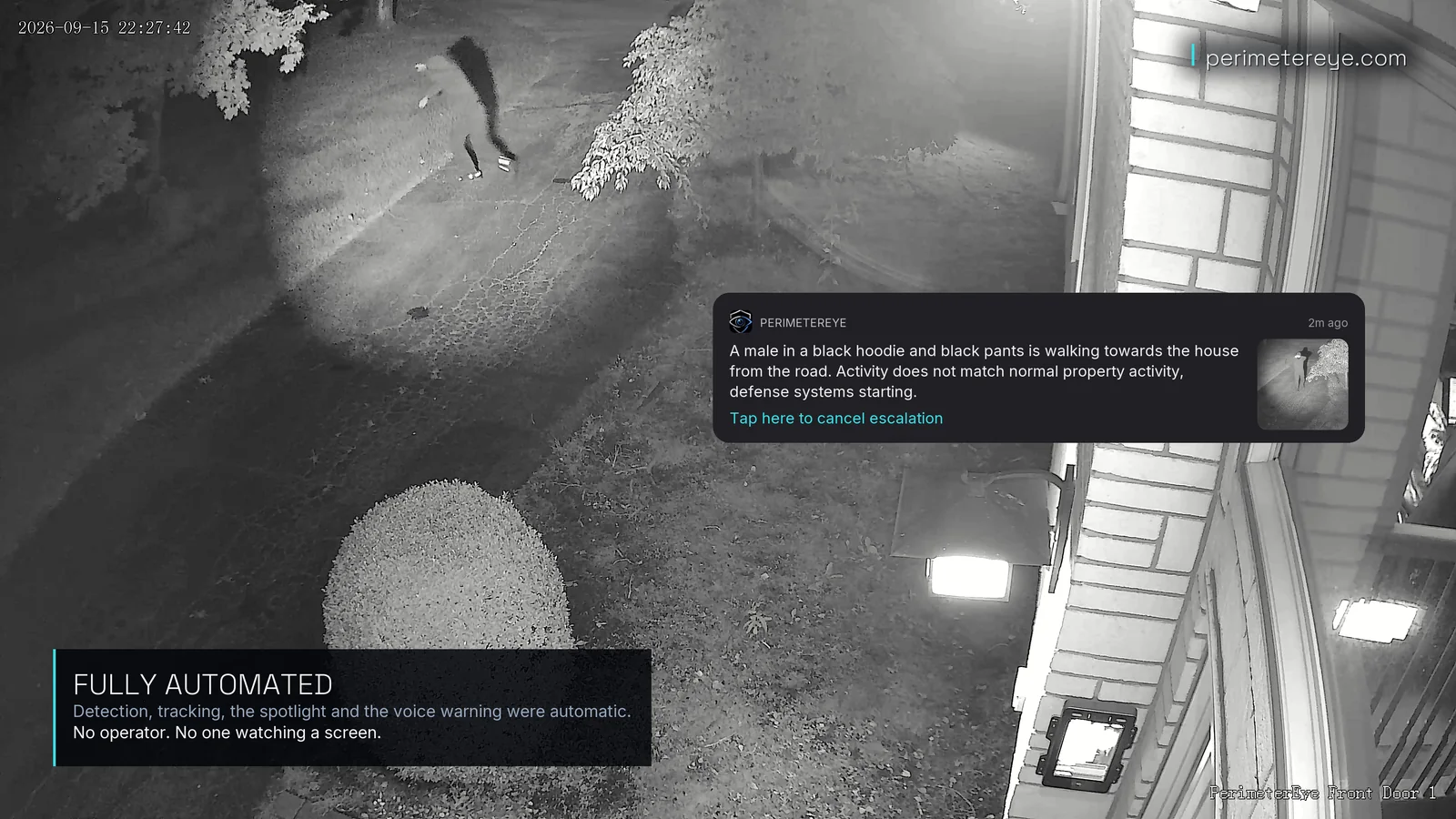
Three seconds from the alert to the searchlight.
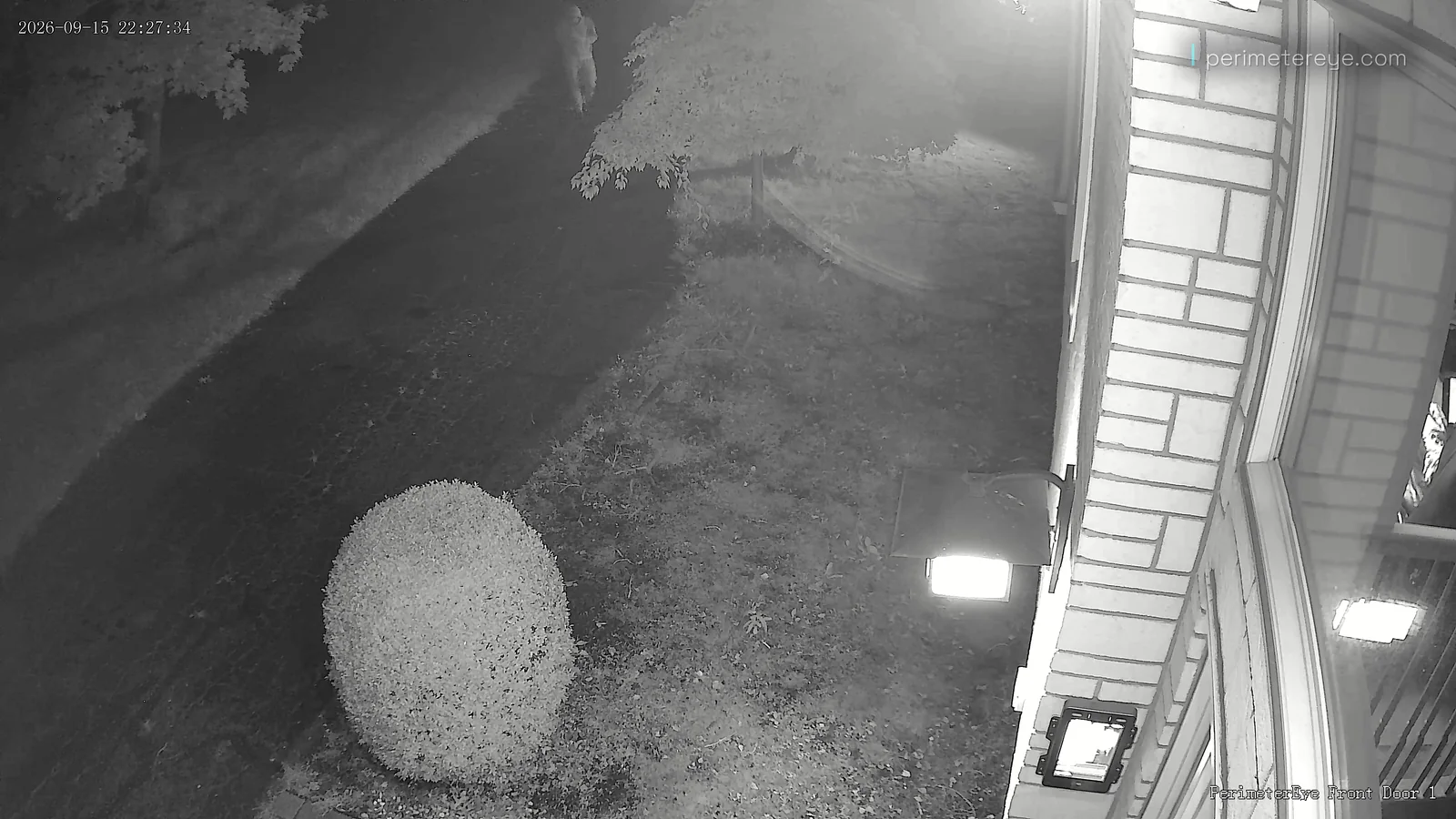
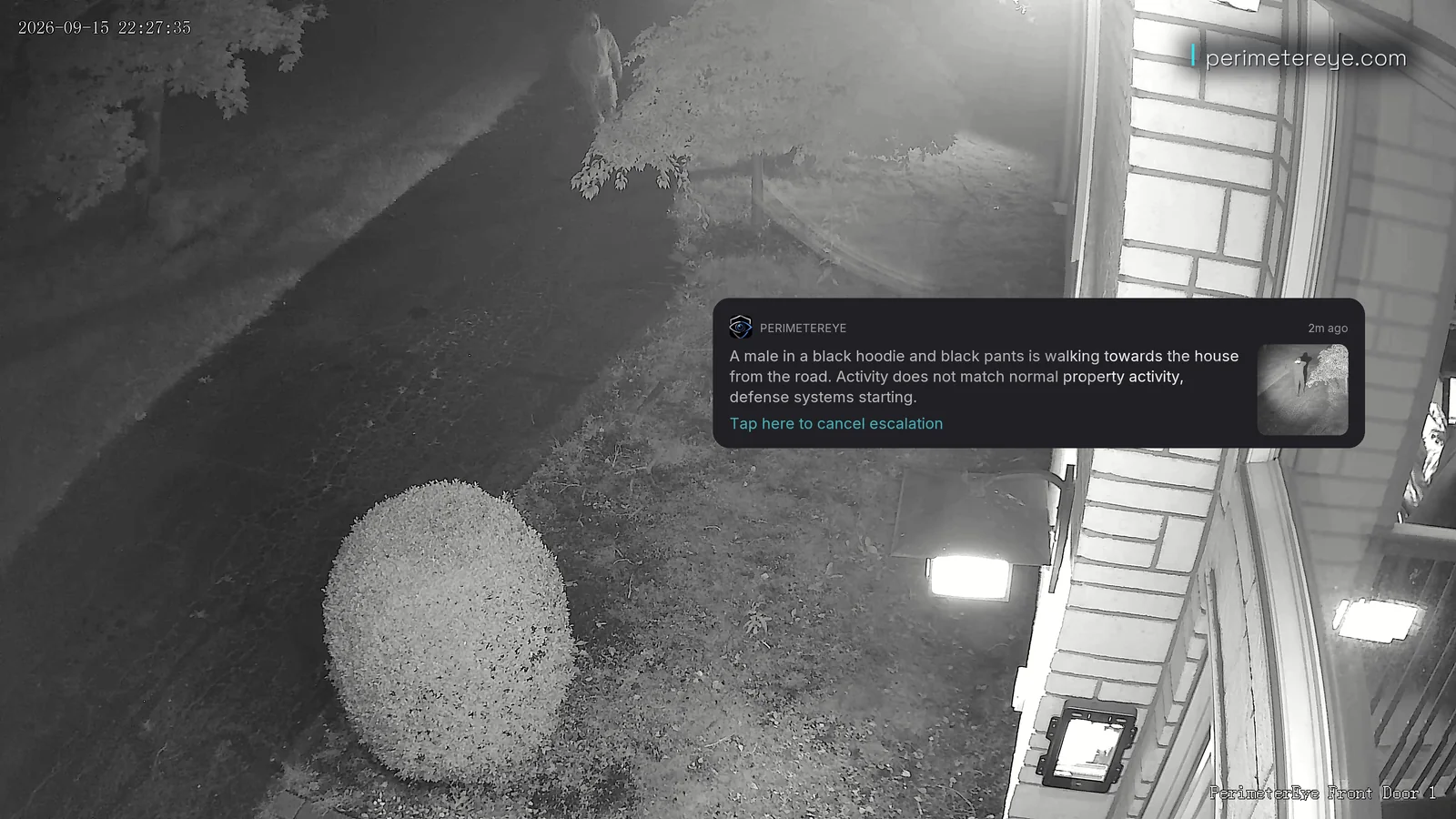
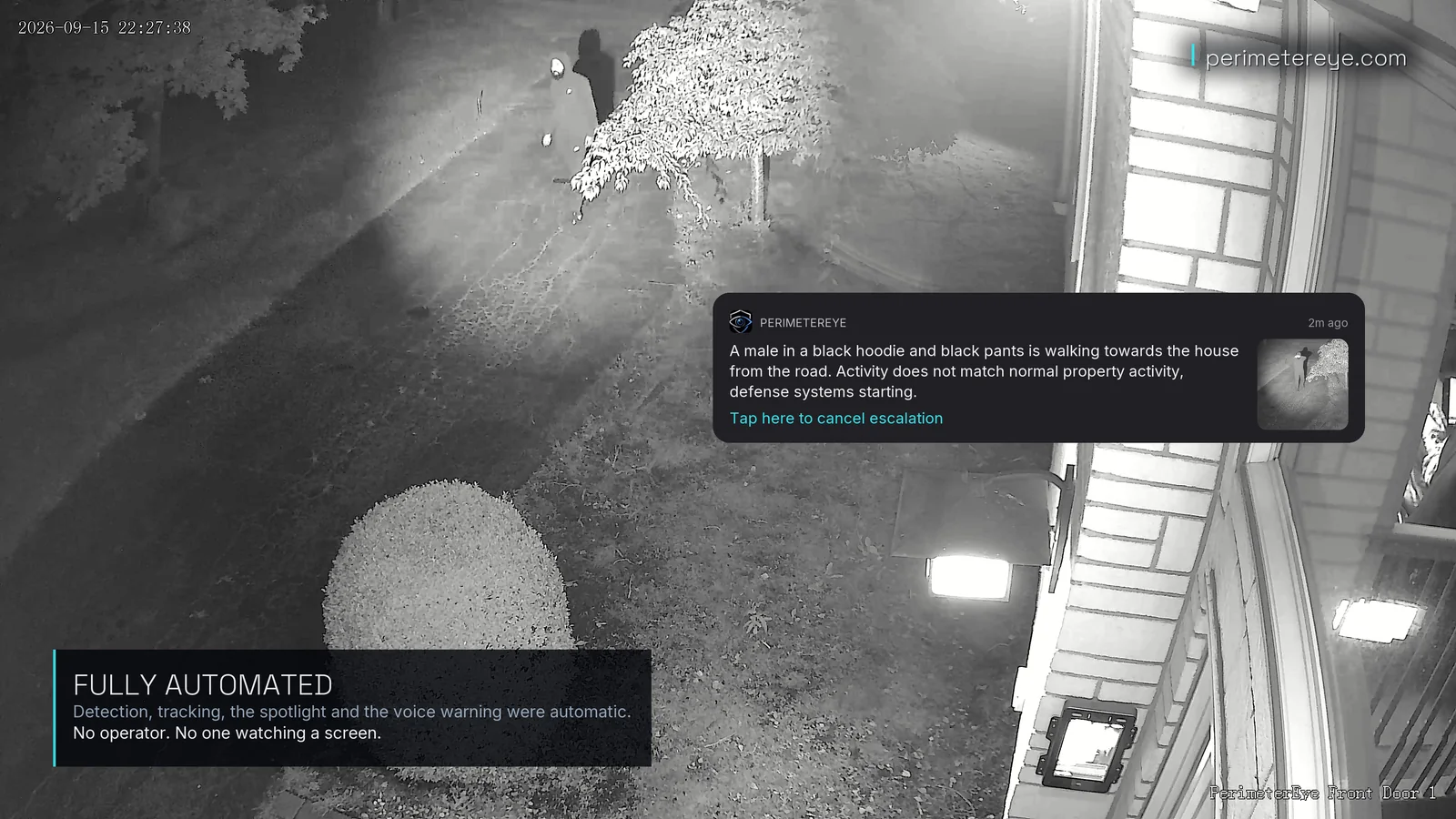
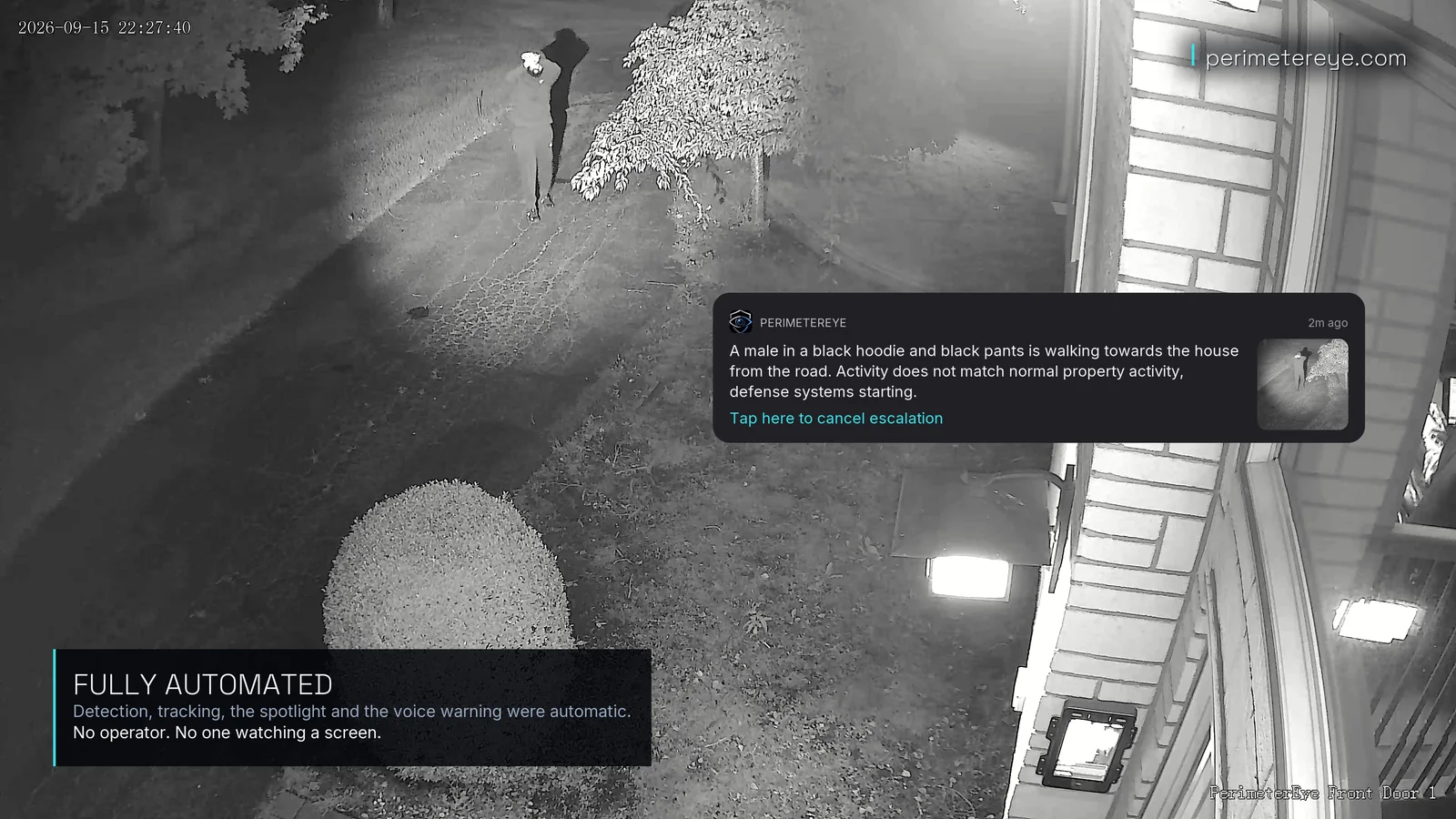
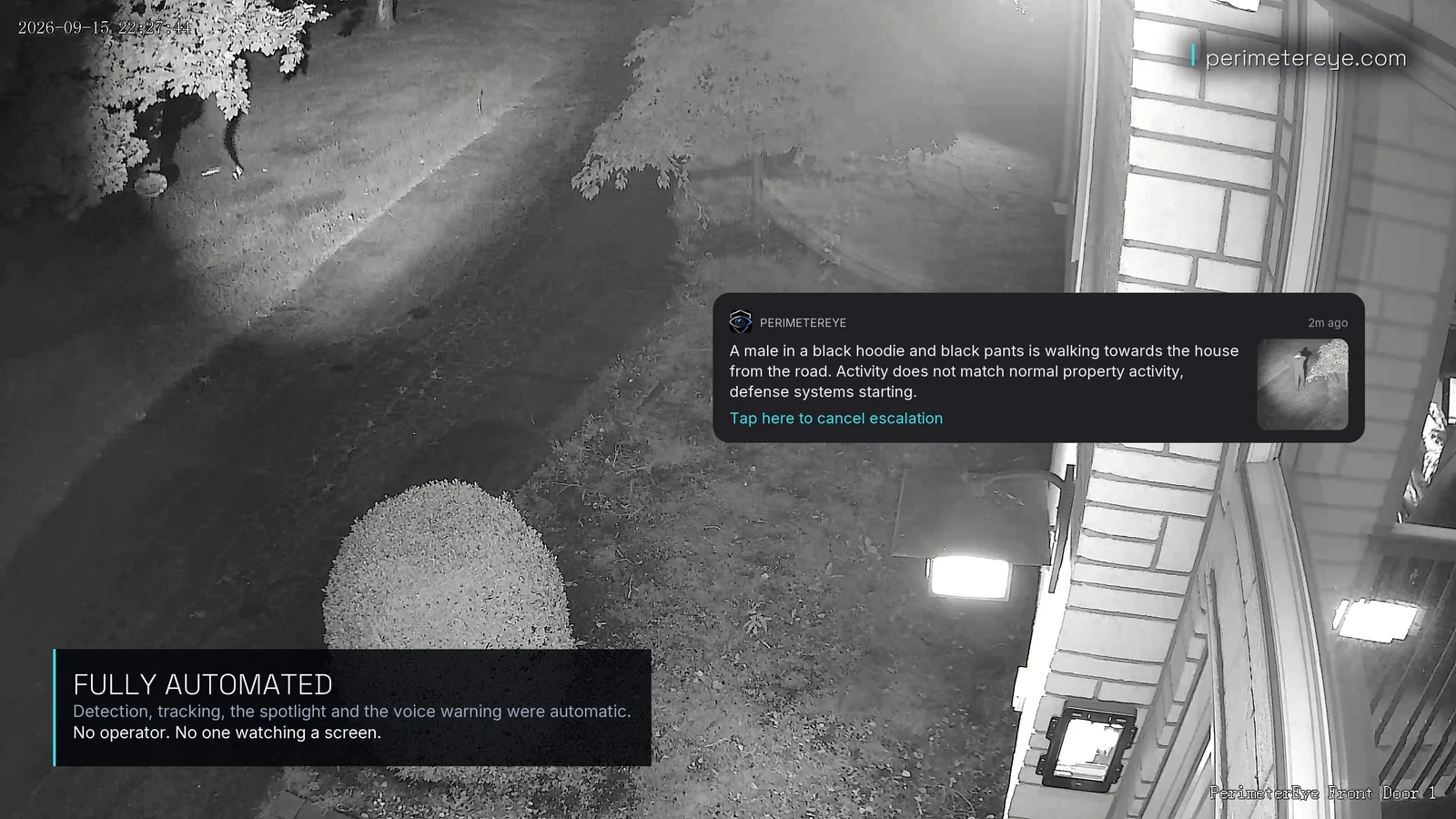
Front Door 1, on the camera’s own clock. The person is visible at the road end at 22:27:34, the alert describes them at 22:27:35, and the searchlight is on them at 22:27:38. By 22:27:42 they are turning away.
1 of 6 · 22:27:34View full size
Walking in from the road
At the far end of the driveway, in the dark, the person is already in view of the camera.
2 of 6 · 22:27:35View full size
The alert
The alert reads: walking towards the house from the road; activity does not match normal property activity; defense systems starting.
3 of 6 · 22:27:38View full size
In the searchlight
Three seconds after the alert, the searchlight is on the person by the tree. Detection, tracking, the light, and the voice warning were all automatic.
5 of 6 · 22:27:42View full size
Turning away
Four seconds in the light, and the person turns away from the house. The beam goes with them.
6 of 6 · 22:27:44View full size
Followed off the lawn
The searchlight stays on them to the edge of the camera’s view.
Filmed September 15, 2026, on a real property with PerimeterEye cameras and a searchlight. The approach was staged for filming; the system’s response was automatic, with no operator.
Target selection is filtering, not planning
Popular culture pictures burglars studying blueprints. The research describes something faster and more mundane: a scout moves through an area — on foot, by car, sometimes while doing legitimate work — and filters. Most houses are discarded in seconds for reading as risky. The one that gets approached is simply the one left over after everything else was crossed off.
Two sources dominate what we actually know. The first is a 2013 academic survey by Kuhns and colleagues at UNC Charlotte, who asked 422 incarcerated burglars how they chose targets; it was funded by AIREF, an alarm-industry research foundation, which is worth knowing when you weigh its findings. The second is a 2017 KGW-TV project in which journalist Kyle Iboshi put similar questions to 86 Oregon inmates — journalism rather than peer-reviewed research. Their agreement with each other is the best credibility signal either one offers.
The signals burglars ranked highest
When the UNC Charlotte respondents described what pushed them toward or away from a target, the same factors kept surfacing at the top of the list:
Alarms deserve their own line. About 83% of the UNC Charlotte respondents said they would try to determine whether an alarm was present before attempting a burglary, and roughly 60% said they would seek another target if one was. More than half said that discovering an alarm mid-burglary would make them abandon the job. These are self-reports from an industry-funded survey — but no competing data set contradicts them, and they align with what the Oregon inmates said independently.
- Proximity of other people — neighbors with sightlines, foot traffic, anyone who might see the approach or hear the entry
- Escape routes — how many ways out exist and how fast a person can be somewhere unremarkable
- Signs of security — alarm signage, outdoor cameras, any evidence the property is actively watched
- Dogs — indications of a dog inside ranked among the strongest single stay-away signals in both surveys
The knock test
The KGW inmates described a strikingly uniform ritual: essentially all of them said they would knock on the door or ring the bell before doing anything else. Not out of politeness — to test occupancy. A house that answers, in any form, fails the test and gets skipped.
Their strongest stay-away signals were all occupancy proxies: a car in the driveway, sound inside the house — a TV, a radio, footsteps — and a big, loud dog. Their most common entry method involved neither lockpicks nor broken glass; most said they came in through doors and windows that were simply unlocked.
The probing exists because guessing wrong is genuinely dangerous for them. The Bureau of Justice Statistics found that a household member was present during roughly 28% of burglaries. That risk is exactly why occupancy checks are so aggressive — and why signals of presence carry more weight than any lock.
Escape routes and the geometry of your lot
Escape-route thinking explains preferences that otherwise look random. Corner lots offer two directions of exit. Alley access provides a screened approach and a screened retreat. Deep setbacks, tall privacy fencing, and overgrown foundation plantings all cut both ways: they screen your home from the street, and they screen an intruder from every neighbor. What reads as privacy to you reads as concealment to a scout.
You cannot move your lot, but you can change what it shows. Trimming growth that blocks sightlines to entry points, lighting the routes a person would actually use, and keeping side gates locked converts geometry a scout likes into geometry that exposes them. And daylight matters as much as darkness: FBI data for 2024 counted 216,601 daytime residential burglaries against 174,053 at night, because burglars follow occupancy — and houses empty out during work hours.
What visible security signals — honestly
The evidence on visible security is positive but nuanced. The KGW respondents described outdoor cameras as a deterrent — though some read them the opposite way, as a hint that something inside was worth protecting. Alarm signs and stickers appear in the UNC Charlotte deterrent list, with the obvious caveat that a signal which costs nothing is also easy to fake, and experienced offenders know it.
It is also worth saying plainly what the research cannot support. Most of the dramatic percentages that circulate online about homes with and without security have no locatable primary source, and we do not repeat them. The honest picture is narrower: burglars say they check for alarms, most say an alarm would push them elsewhere, occupancy signals dominate everything, and the national burglary rate sits at a record low of 229.2 per 100,000 (FBI, 2024), with roughly 52% of burglaries hitting residences.
The decision is made during reconnaissance
Put the two surveys together and one conclusion stands out: target selection is finished before anything illegal happens. The knock, the slow drive-by, the glance down the side yard — that is the decision point. Whatever your property communicates during those minutes is the only case it gets to make.
This reframes what deterrence means. A system that reacts only at the moment of entry is arguing after the verdict. The properties that come off the list early are the ones that answer the probe: a door that responds when knocked, light that arrives at the right moment, evidence of active attention rather than passive recording. The research says most scouts who conclude they are being watched apply the simplest rule in their playbook — find an easier one.
How a property-defense system applies the research
If you searched how burglars choose houses while shopping for a home security system, one distinction is worth understanding: nearly everything in that category — cameras, alarm panels, monitored sensors — watches, records, and notifies. An Automatic Property Defense System like PerimeterEye is built for the reconnaissance window instead: it acts on the property itself, in seconds, automatically, while you watch live.
The escalation maps almost one-to-one onto the signals in these surveys. The system verifies that an unknown person is on the property — it knows the household, so family arrivals and mail carriers never trigger deterrence. Then a motorized searchlight locks onto the person and physically follows them, the way a police helicopter's beam holds a subject. Then a live AI voice addresses them specifically, describing the actual person in frame — the strongest possible answer to the occupancy question every burglar asks first. If they stay, a 130 dB siren fires and you get priority alerts with live video, with the option to speak yourself or take manual control at any point.
That is the burglar's own checklist run in reverse: people present, property watched, alarm confirmed. No security system can guarantee prevention of every incident, but the research is unambiguous about which signals make a scout move on — and a property that produces all of them during reconnaissance takes itself off the list at the only moment the list is being written.
Common questions
Do burglars really knock on the door before breaking in?
According to the 2017 KGW-TV survey of 86 incarcerated Oregon burglars, essentially all of them said they would knock or ring the doorbell first to test whether anyone was home. An answered door — in person or through an intercom — usually ends the attempt before it starts. The series was journalistic rather than peer-reviewed, but the pattern was near-universal.
When do most home burglaries happen — day or night?
Daytime. FBI Crime in the Nation 2024 data recorded 216,601 daytime residential burglaries against 174,053 at night. That fits the occupancy logic burglars describe: most people are at work or school during the day, so an empty-looking house in daylight is a softer target than a dark house that might have sleepers inside.
Does a car in the driveway deter burglars?
Yes — in the KGW-TV survey of 86 Oregon inmates, a car in the driveway was one of the strongest signals that made burglars move on, alongside sound inside the house and a big, loud dog. All three say the same thing: someone is probably home, and people nearby were the top-ranked concern in the UNC Charlotte study too.
Is burglary becoming more or less common?
Less common. The FBI's Crime in the Nation 2024 release put the national burglary rate at 229.2 per 100,000 people — a record low — with roughly 52% of burglaries hitting residences. Falling rates are real, but they describe averages: hundreds of thousands of homes are still entered every year, and target selection decides which ones.
How do I know if someone is casing my house?
Watch for occupancy probes: unfamiliar knocks with weak explanations, repeated slow drive-bys, someone lingering near sightlines or photographing the property, and door or gate handles tested while you are away. Burglars say the decision is made during this phase, so a visible reaction — light, a voice, an answered doorbell — matters most right then.
Sources
- Kuhns et al., Understanding Decisions to Burglarize from the Offender's Perspective (2013, UNC Charlotte; AIREF industry-funded survey of 422 incarcerated burglars)
- KGW-TV, "We Asked 86 Burglars" (2017, Kyle Iboshi; journalistic survey of Oregon inmates)
- FBI Crime in the Nation 2024, FBI Crime Data Explorer
- Bureau of Justice Statistics, Victimization During Household Burglary (2010)
What it costs
See what a system costs for your property.
Essential system
As low as$146/mo*Essential covers a driveway and the approaches to the house. Larger properties usually suit Advanced or Estate; a specialist can size it with you before you order.
What’s included
- 5 ultra-HD 4K cameras
- 1 tracking spotlight
- 1 speaker/siren unit
- PerimeterEye Access intercom, included with every complete system
- 1 PerimeterEye control panel
- 1 PerimeterEye AI processor
*Essential system, $0 down: 36 monthly payments of $145.17 at 10% APR on the hardware price before sales tax, shown rounded up to the dollar. Affirm rates 0–36% APR; Klarna terms are shown at checkout. Subject to eligibility and lender approval; your rate, term and down payment may differ. US only; not available in all states. Software is billed separately: first 6 months included, then $99/month.
Answer the probe in seconds
PerimeterEye answers the scout's checklist automatically — tracking searchlight, live targeted voice, siren — while you watch from anywhere. Property defense makes its case during reconnaissance, when the decision is actually made.