A coordinated response
Light and speech work together to make the system’s response clear to the person at the vehicle.
Immobilizers, trackers, and steering locks protect the car’s own systems. A tow truck, a relay device, or a stolen key goes around them. None of those work without a person on your driveway, at your car, and that is where PerimeterEye responds, in seconds: a tracking searchlight finds them, a live AI voice addresses them, and a 130 dB siren escalates, while you watch live.
A staged vehicle break-in on a real property. Voice warning, tracking searchlight and a 130 dB siren — automatic, on-site, no operator. The scenario was staged for filming; the system's responses were not.
Play with sound to hear the voice warning and siren.Frame by frame, from the film
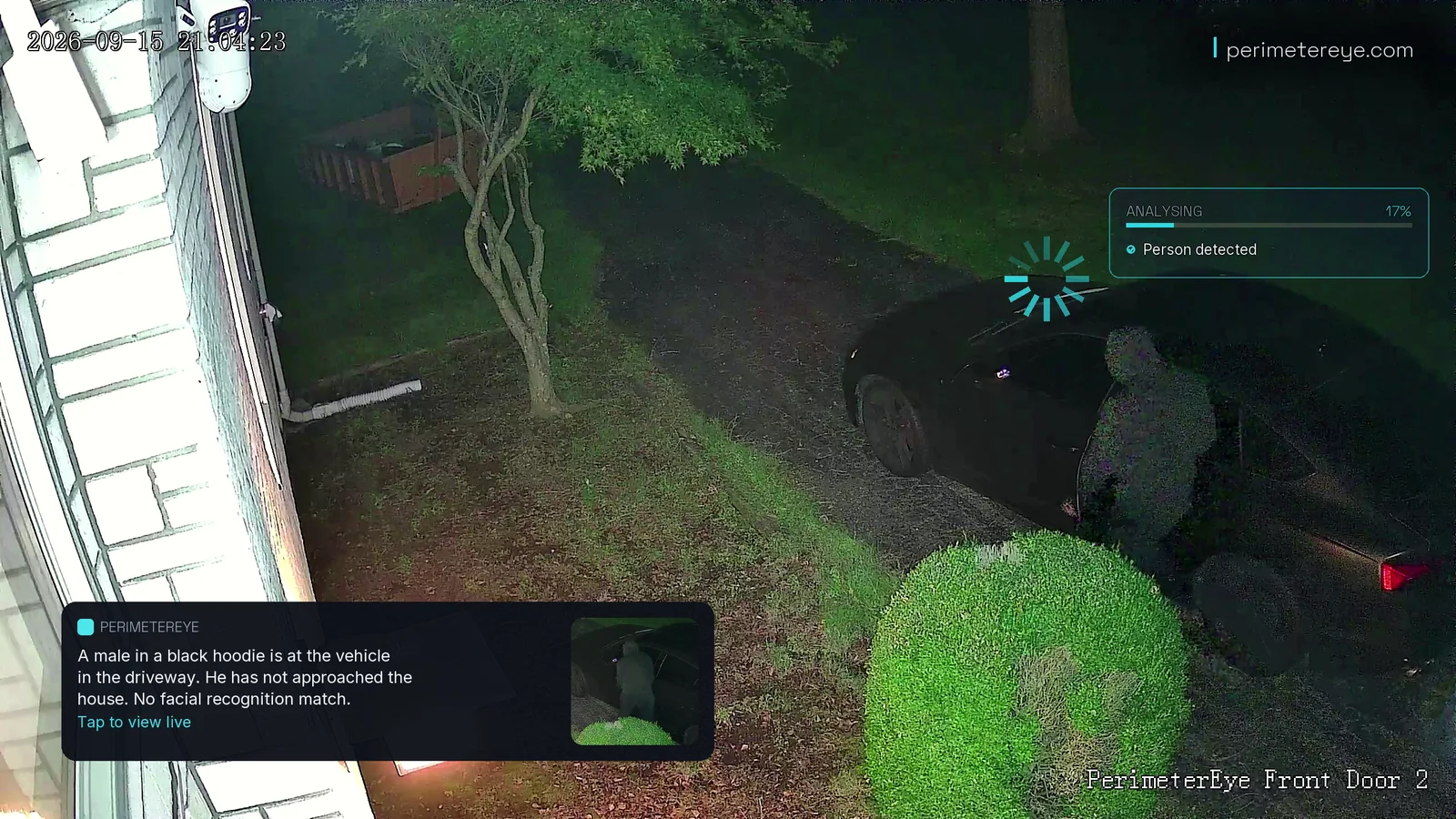
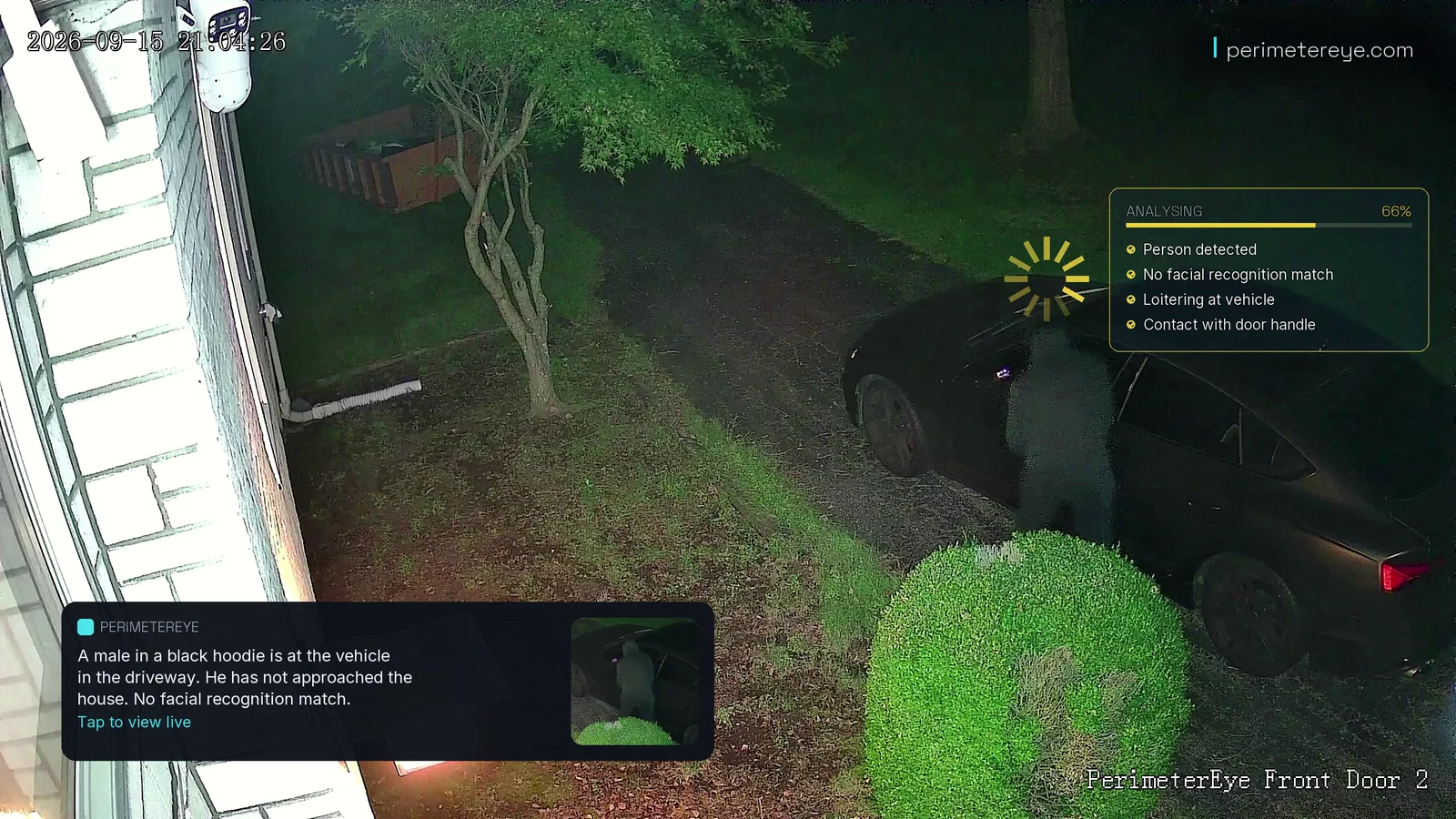
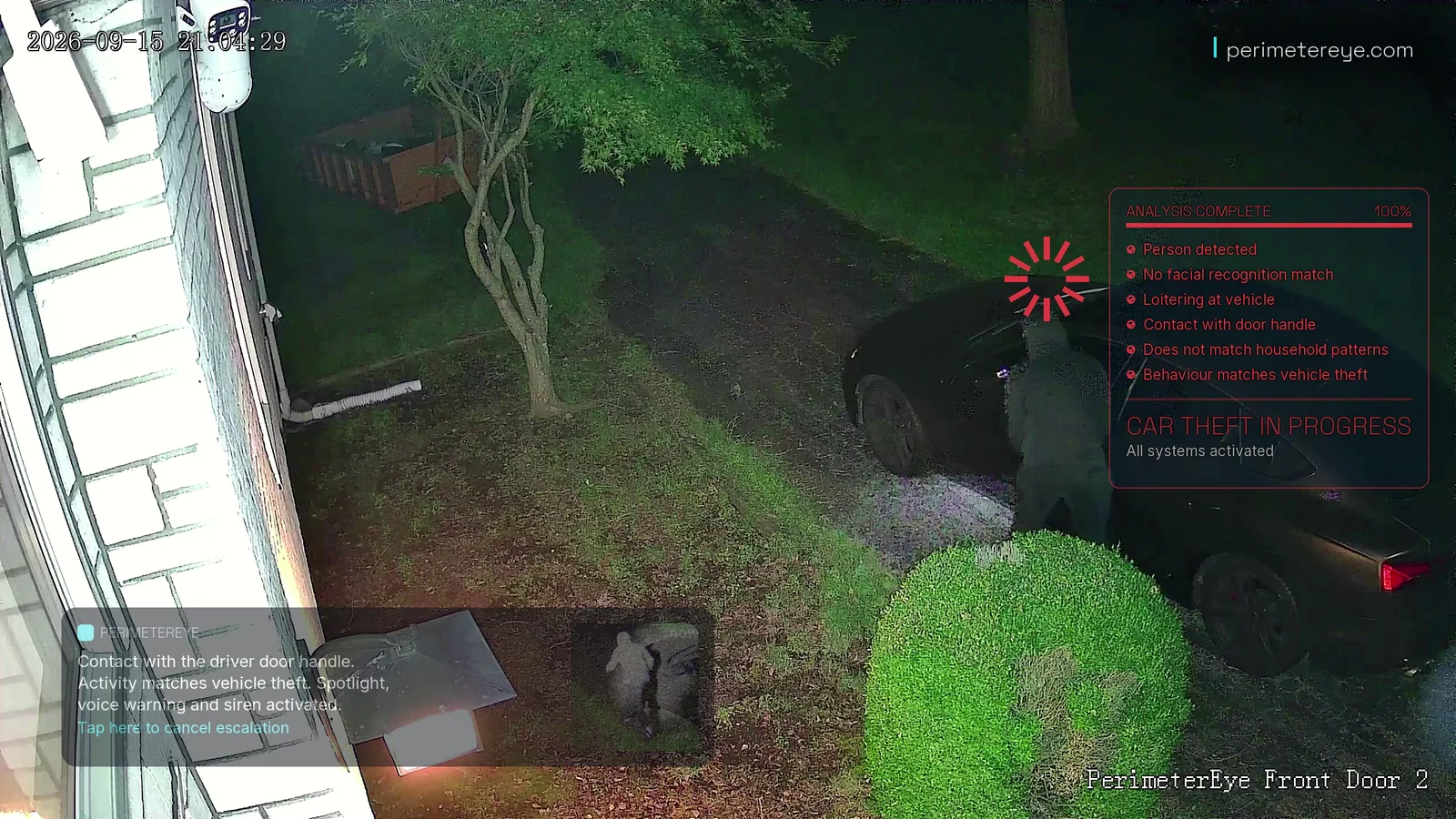
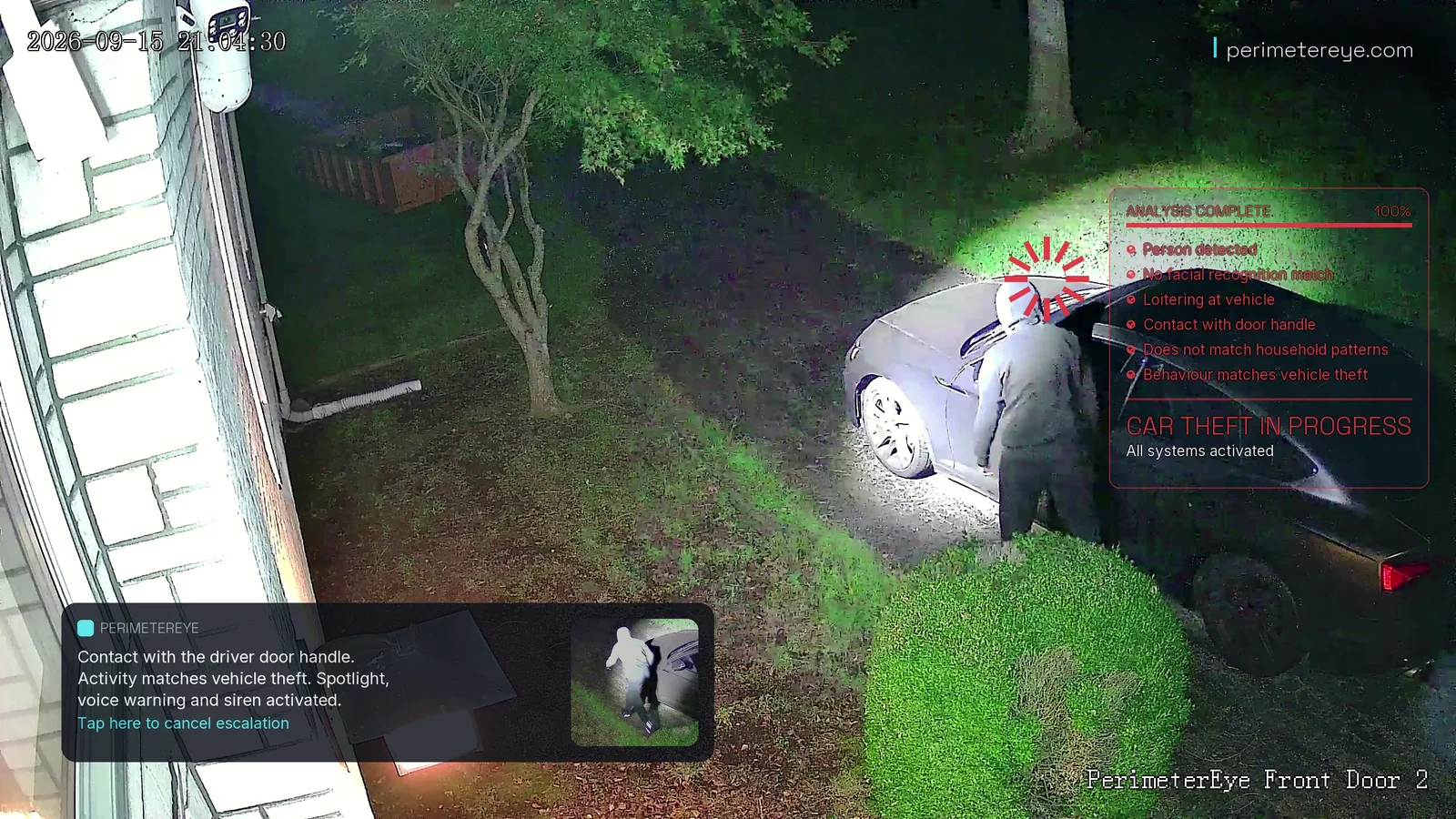
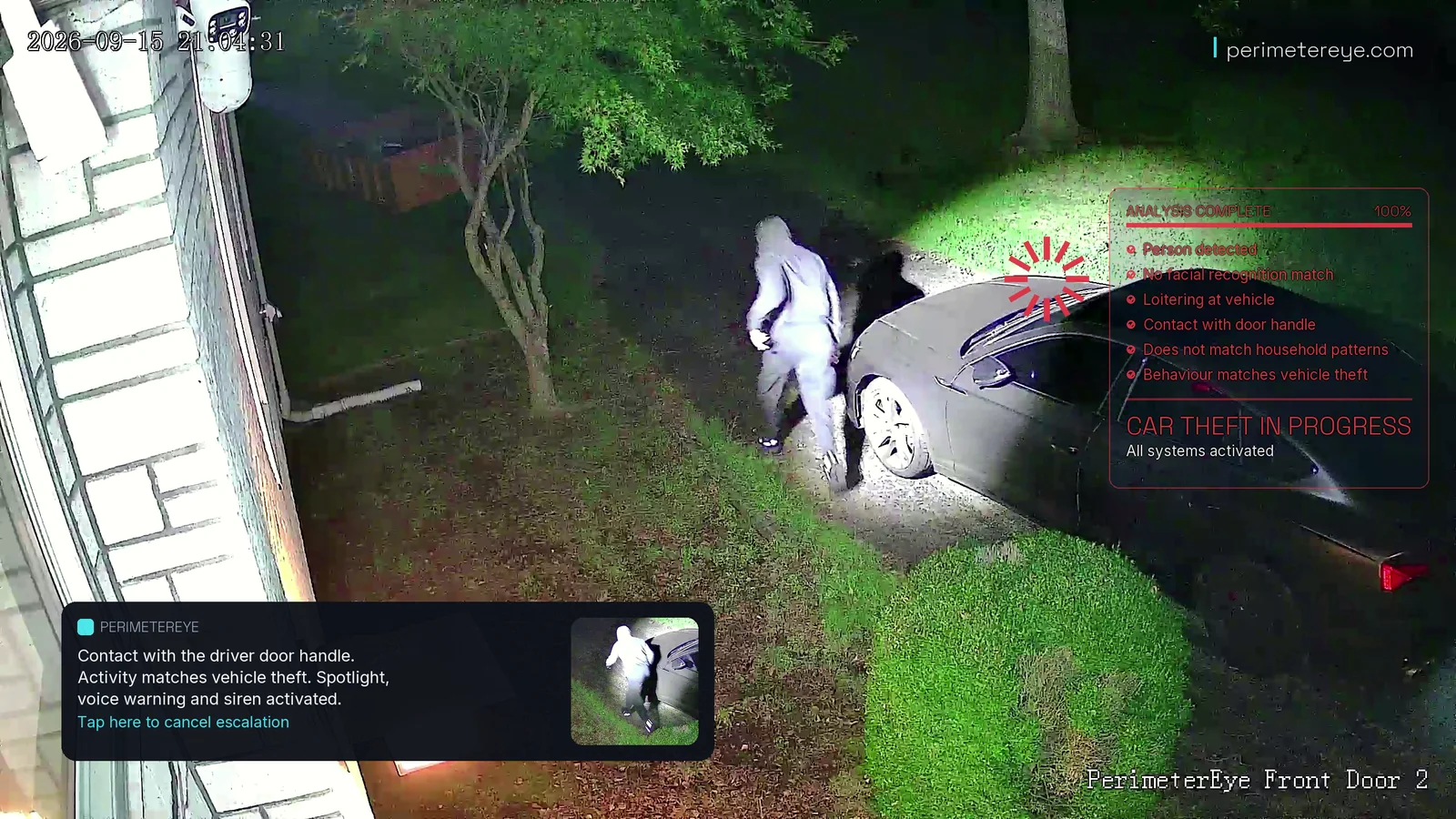
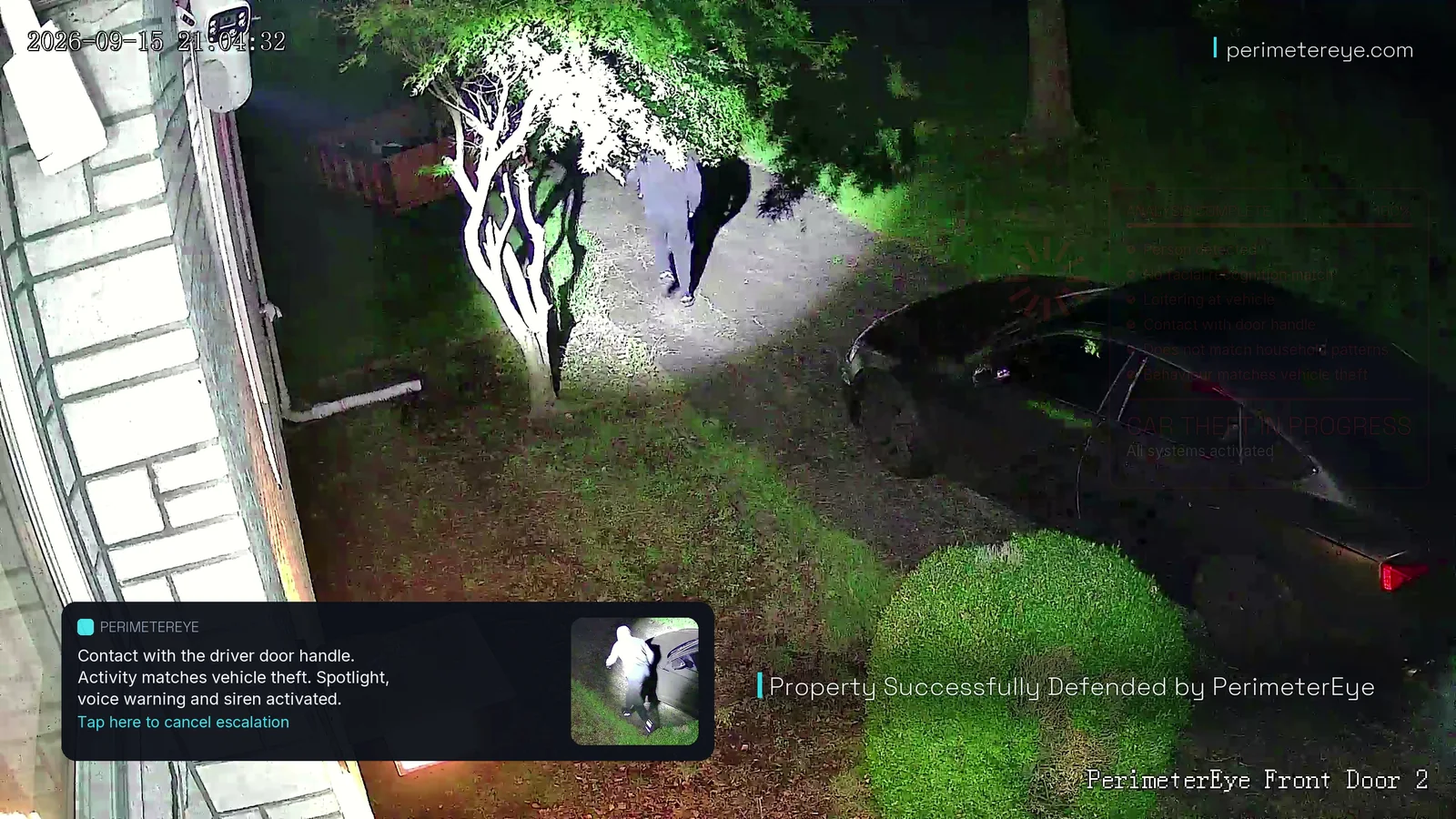
Stills from the film with its on-screen analysis and phone alert, on the Front Door 2 camera’s own clock. The door handle registers at 21:04:26. By 21:04:29 all systems are activated, and at 21:04:31 the person is running.
1 of 6 · 21:04:23View full size
The person in the black hoodie is at the car, and the first alert already describes them: at the vehicle in the driveway, and has not approached the house.
2 of 6 · 21:04:26View full size
The person reaches for the driver’s door. The analysis builds second by second: a person, no match to anyone it knows, loitering at the vehicle, and now contact with the door handle.
3 of 6 · 21:04:29View full size
Three seconds after the door handle, the analysis is complete: the activity doesn’t match the household’s patterns and matches vehicle theft. All systems activate.
4 of 6 · 21:04:30View full size
The searchlight hits the person at the driver’s door. The alert reads: spotlight, voice warning and siren activated, with a tap to cancel the escalation.
5 of 6 · 21:04:31View full size
Five seconds after touching the door handle, the person is running from the car, and the searchlight stays on them.
6 of 6 · 21:04:32View full size
The searchlight follows the person past the tree and along the drive. The car hasn’t moved.
Filmed September 15, 2026, on a real property. The break-in was staged for filming; the system’s response was automatic, with no operator. Play the film above with sound to hear the voice warning and the siren.
The tow-truck problem
Immobilizers, kill switches, and keyless settings share one idea: stop the car from being started or driven. The common ways cars are taken don’t need either.
A tow operator has to walk up to the car to hook it. A relay thief stands at your door, then at the car. Someone with a key still has to open it and drive it off your driveway. At a property covered by PerimeterEye, that person is found by a tracking searchlight, addressed by a live AI voice that speaks to what they are doing, and put under a 130 dB siren, while your phone shows you the live view. In the film, it took five seconds from the door handle to the person running.
What separates PerimeterEye
Most of these are worth having. Only one of them responds to the person at the car while it is happening.
| Option | While the car is being taken | Once it’s gone |
|---|---|---|
| Immobilizer or kill switch | Blocks the engine from starting. A tow truck never needs to start it, and a relay device or a stolen key gets past a factory immobilizer. | Nothing. |
| Steering-wheel or pedal lock | Makes driving it away slow and obvious, but rides along when the car is lifted onto a truck. | Nothing. |
| GPS tracker or tag | Nothing happens at the car. | Helps locate the car, unless the tracker was found and removed. |
| Car alarm | Sounds the horn when a door, or on some cars a tilt sensor, is triggered. Nobody is told who is there. | Nothing. |
| Cameras and floodlights | Record it and send a motion alert. A fixed light may switch on, but it doesn’t follow anyone. | A recording of the theft. |
| PerimeterEye | Finds the person at your car with a tracking searchlight, speaks to them, and escalates to a 130 dB siren within seconds, while you watch live and can talk to them yourself. | The Event Timeline keeps the whole event: the camera views, the analysis, and every response. |
The hardware behind the response
A motorized searchlight is one connected part of the system. The Brain commands where it aims and what it follows, using the camera context, system assessment, and your settings.
Light and speech work together to make the system’s response clear to the person at the vehicle.
The dedicated siren has adjustable volume and owner activation and stop controls.
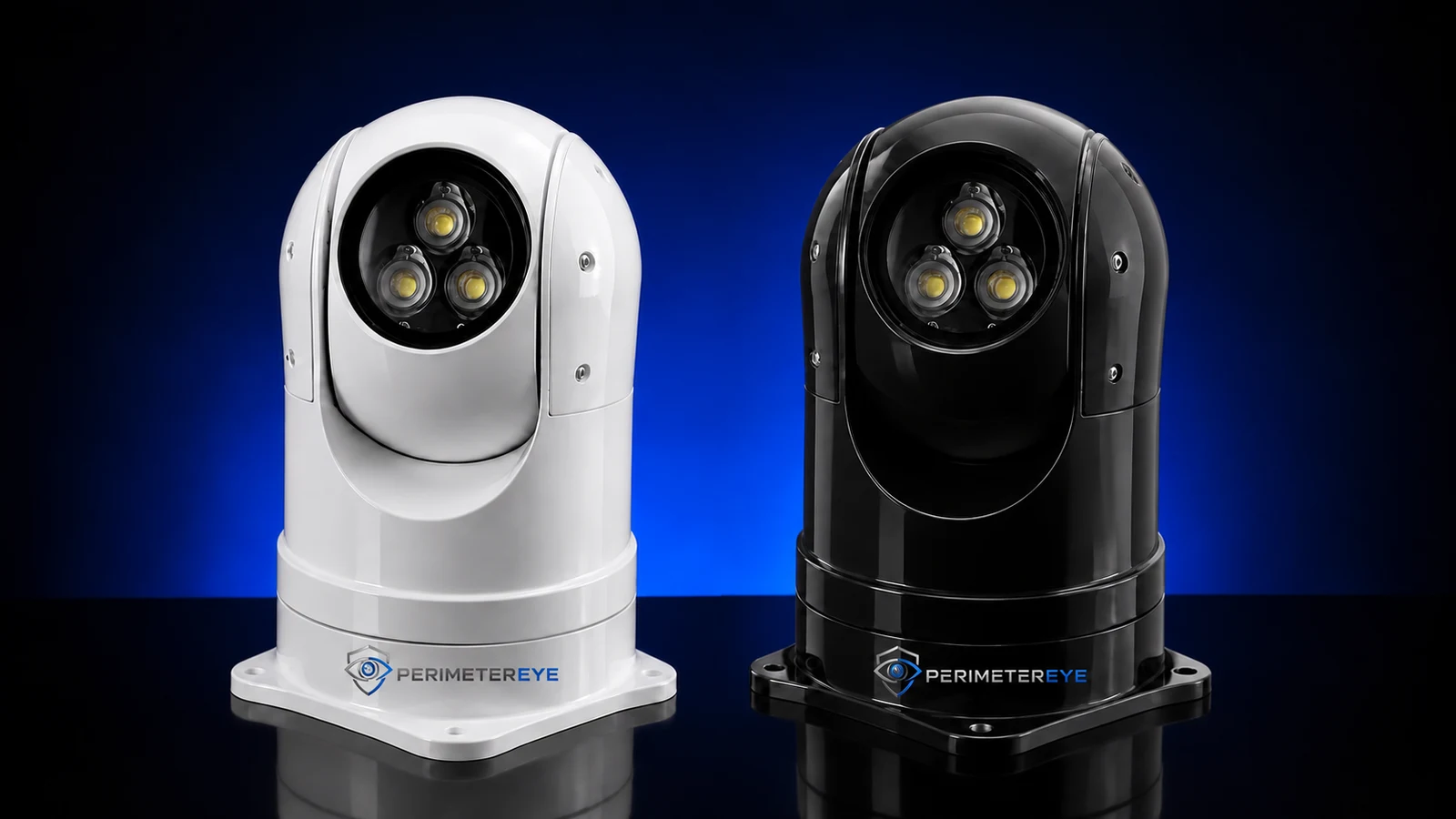
The product photo shows the black and white searchlight finishes. Each unit has 355° rotation and 90° tilt; useful coverage depends on mounting, sight lines, and the property.
 View photo
What it costs
Essential system
As low as$146/mo*Essential covers a driveway and the approaches to the house. Several vehicles, a detached garage, or a long drive usually suit Advanced or Estate; a specialist can size it with you before you order.
What’s included
*Essential system, $0 down: 36 monthly payments of $145.17 at 10% APR on the hardware price before sales tax, shown rounded up to the dollar. Affirm rates 0–36% APR; Klarna terms are shown at checkout. Subject to eligibility and lender approval; your rate, term and down payment may differ. US only; not available in all states. Software is billed separately: first 6 months included, then $99/month.
Coverage around the vehicle
A clear view of the vehicle is useful. A clear view of the activity around it is essential.
From the alert to your next action
Check the relevant camera from your phone or wall panel to understand the activity around the vehicle.
Use live audio through supported hardware, change Property Modes, or escalate and de-escalate through owner controls.
Return to the Event Timeline for activity, camera views, and response context. Available footage depends on storage and retention settings.
Go deeper
Before you choose
It’s built to interrupt a tow-truck theft while it’s happening, not to record it for later. To hook up a car, someone has to walk up to it, and at a driveway PerimeterEye covers, they do it in a tracking searchlight, addressed by a live AI voice and put under a 130 dB siren, while you watch live and can speak to them yourself. Its tools are light, voice, sound, and alerts, and no security system can guarantee prevention of every incident.
Those protect the car’s own systems and help recover it afterward. They don’t react to a tow truck, and a relay device or a stolen key gets past a factory immobilizer. PerimeterEye covers the place the car is parked, so it responds to the person at the car whatever method they use.
In the filmed vehicle break-in, the analysis registered contact with the driver’s door handle at 21:04:26 on the camera’s clock, all systems activated at 21:04:29, and the person was running from the car at 21:04:31: five seconds from the door handle.
The attempted break-in was staged on a real property for filming. The working PerimeterEye system responded automatically with a targeted voice warning, tracking searchlight, and siren; an operator was not driving the response.
No. PerimeterEye responds around parked vehicles from the property: cameras and connected deterrence hardware cover the parking area. Nothing is installed in each vehicle, so it covers any car parked there, including a guest’s.
PerimeterEye learns your property and your household and assesses ordinary activity in context, so walking to your own car is not treated as a theft. There is nothing to arm or disarm. The deterrent response is for activity it assesses as concerning, and you can change or stop it from your phone or wall panel.
Yes. Coverage can be planned around multiple parking spaces, a detached garage, a carport, or a long drive. Camera angles need to account for the vehicles themselves blocking views, including taller vehicles or a changed parking arrangement.
Essential covers a driveway and the approaches to the house, as low as $145.17/mo for Essential (36 monthly payments at 10% APR, $0 down, through Affirm or Klarna, subject to approval). The software and AI service is included for the first 6 months, then $99/month. Detached garages, several vehicles, and long drives usually suit Advanced or Estate, and a specialist can size it with you.
Tell a specialist where you park, how many vehicles you keep, and whether there’s a detached garage or a long drive. They’ll size the system with you, or book a call first if you’d rather talk it through.
Explore an upgrade for your existing camerasSystem launch offer
First 6 months included from activation. Then $99/month.
Compare system packages